




















|
Getting your Trinity Audio player ready...
|
By: Carl Schwartzbaum
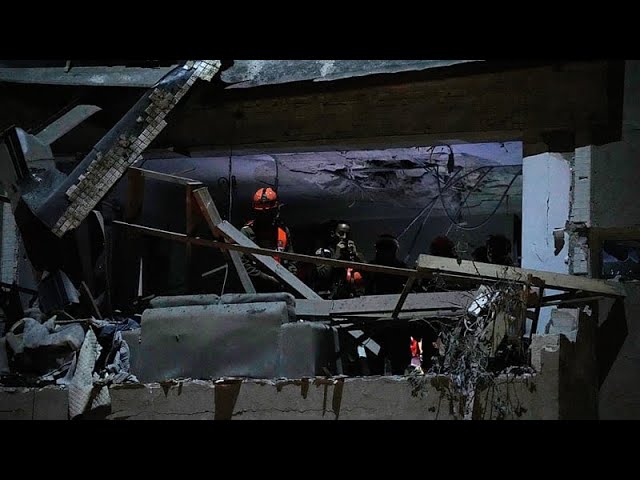
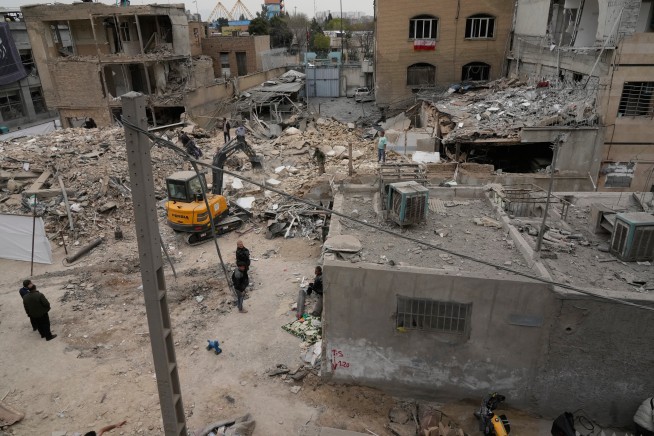
Israel launched a sweeping new wave of airstrikes against Iranian regime infrastructure in Tehran early Friday morning, marking another dramatic escalation in the expanding military confrontation between Israel, the United States, and the Islamic Republic of Iran. The Israel Defense Forces confirmed that the overnight operation targeted key installations tied to Iran’s military capabilities and governing apparatus, part of an ongoing campaign designed to degrade Tehran’s missile arsenal and strategic command network.
According to a report on Friday at Israel National News, the operation began in the early hours of Friday when Israeli aircraft initiated a broad-scale assault against facilities linked to what Israeli officials describe as the “Iranian terror regime.” The IDF Spokesperson’s Unit stated that the attacks were focused on critical infrastructure inside the capital, including sites associated with the country’s ballistic missile program and other military assets that Israeli leaders say pose an existential threat to the State of Israel.
The strikes formed part of a larger sequence of military actions that have unfolded since the beginning of the operation against Iran earlier this week. Over the past several days, Israeli aircraft have repeatedly targeted strategic installations throughout the Islamic Republic, with particular emphasis on neutralizing the missile launch infrastructure used to fire long-range projectiles toward Israeli territory.
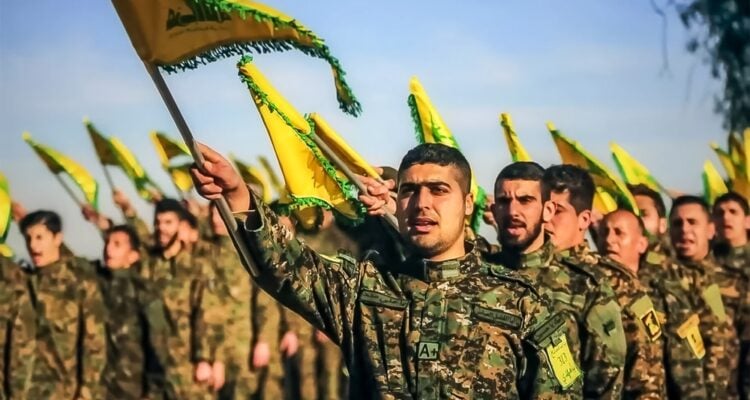
Even as the Israeli Air Force pressed forward with its offensive operations deep inside Iran, Israel itself continued to face persistent threats from multiple fronts. Overnight Thursday, air-raid sirens were triggered repeatedly across northern Israel as rockets and drones were launched from Lebanon, presumably by the Iranian-backed Hezbollah organization.
Communities throughout the Galilee region experienced a tense night as sirens sounded no fewer than fourteen times, sending residents scrambling for shelter amid fears of incoming attacks. According to the information provided in the Israel National News report, Israeli defense systems successfully intercepted the threats, preventing casualties or major damage.
Emergency services reported no injuries following the barrage, a result largely attributed to the country’s advanced missile defense network, which has repeatedly demonstrated its effectiveness against aerial threats. Nevertheless, the continued launches underscored the multi-front nature of the current conflict, with Iran’s network of regional allies attempting to exert pressure on Israel even as Tehran itself absorbs heavy military blows.
While Hezbollah’s rocket fire created tension along Israel’s northern border, the Israeli Air Force simultaneously intensified its campaign inside Iran. Throughout Thursday, Israeli aircraft carried out another wide-ranging wave of strikes against approximately 200 targets scattered across western and central Iran.
As Israel National News reported, the attack involved the deployment of numerous precision-guided munitions against facilities believed to be directly involved in Iran’s missile program. Among the targets were dozens of ballistic missile launchers—systems that Israeli officials have repeatedly identified as the backbone of Iran’s capacity to threaten Israel with long-range strikes.
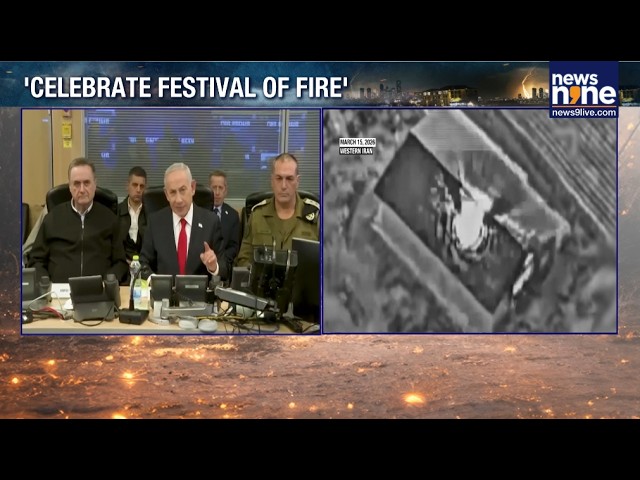
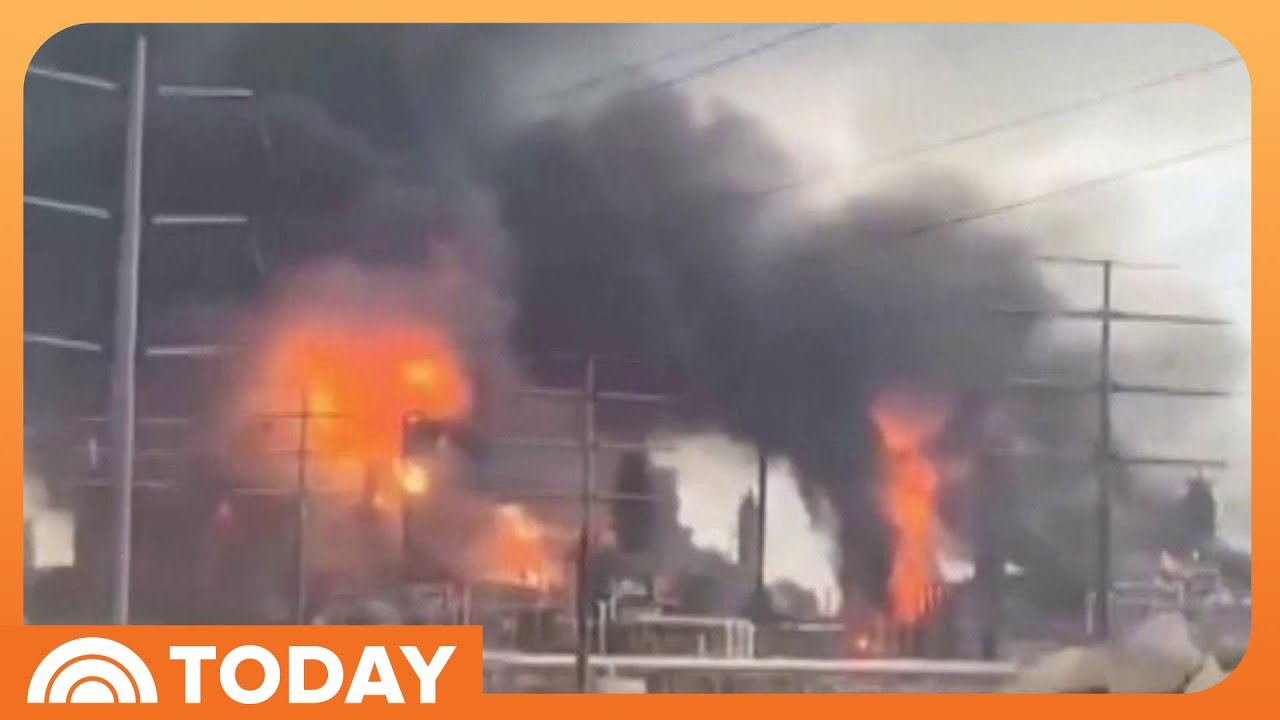
Footage released by the Israeli military from one of the targeted sites showed explosions engulfing a military compound as Israeli munitions struck the facility. The video, circulated widely in Israeli media, appeared to show several Iranian soldiers being killed during the attack.
According to Israeli officials, the latest strikes represent only the most recent stage in an expanding effort to dismantle Iran’s missile infrastructure. Since the beginning of the operation, hundreds of missile launch sites across Iran have reportedly been destroyed.
The concentration of attacks in western Iran reflects a strategic calculation by Israeli planners. Many of Iran’s long-range missile systems capable of reaching Israeli territory are positioned in that region, allowing them to fire westward across Iraq and Syria toward the Mediterranean.
By targeting these launch platforms and their associated logistics networks, Israel hopes to drastically reduce the volume of missile fire directed toward its cities.
As Israel National News has noted in its coverage of the conflict, Israeli leaders have consistently framed the campaign as a defensive necessity aimed at eliminating what they describe as an existential threat posed by Iran’s ballistic missile arsenal and nuclear ambitions.
Yet the widening war has also triggered reactions from Iran’s broader network of allied militias throughout the Middle East. One of the most explicit warnings came Thursday from Abdul Malik al-Houthi, the leader of Yemen’s Houthi rebel movement.
In a televised speech reported by AFP, al-Houthi declared that his forces remain ready to intervene militarily in support of Iran if circumstances demand it.
“Regarding military escalation and action, our fingers are on the trigger, ready to respond at any moment should developments warrant it,” al-Houthi said.
The Houthis have previously demonstrated their willingness to target Israel. Beginning in late 2023, the Iranian-backed movement launched a series of missile and drone attacks against Israeli territory as a show of solidarity with Hamas during the war in Gaza.
Israel responded to those attacks with several waves of airstrikes in Yemen, eliminating a number of senior Houthi officials and destroying military facilities linked to the group’s missile capabilities.
Although the Houthis temporarily suspended their attacks following a ceasefire in Gaza last October, their leadership has continued to issue threats against Israel. The renewed tensions surrounding Iran have now raised the possibility that the group could re-enter the conflict.
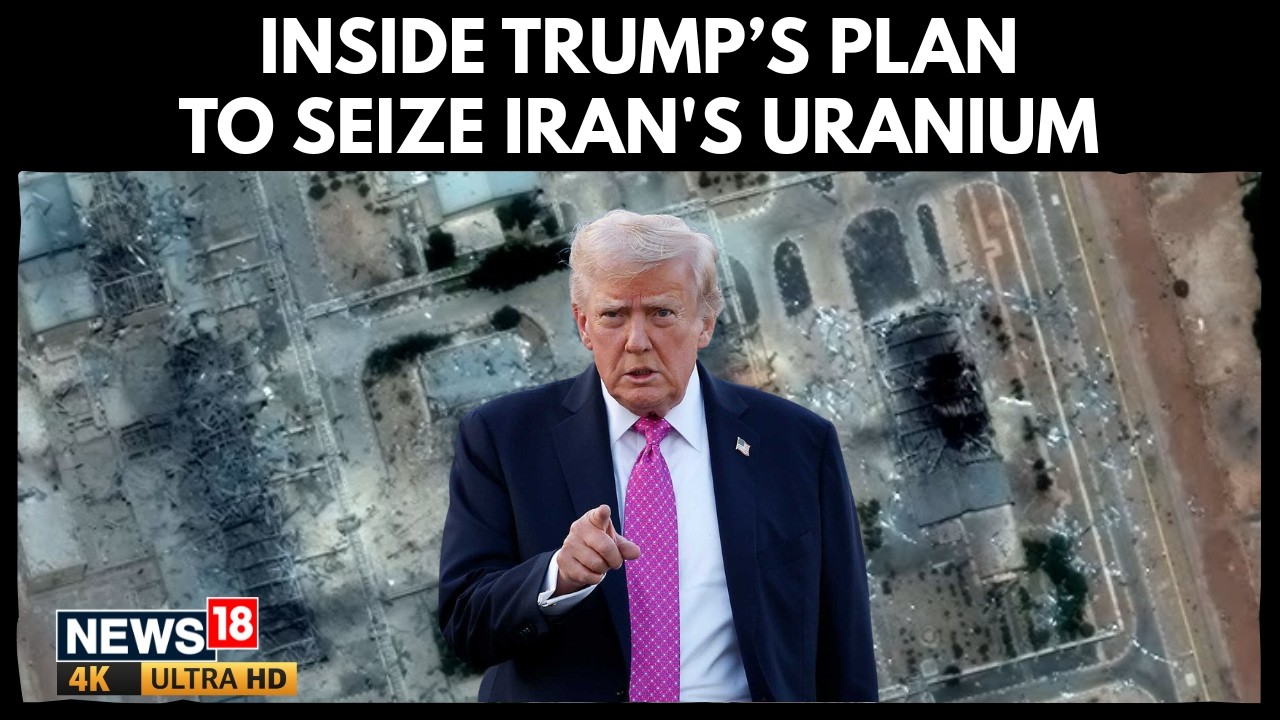
Meanwhile, the United States has signaled that its own military campaign against Iran will continue unabated. President Trump made clear Thursday that his administration intends to maintain intense pressure on Tehran while rejecting the notion that American or Israeli ground forces will be required to invade the country.
In a phone interview with NBC News, Trump articulated a sweeping objective: dismantling Iran’s existing leadership structure to prevent it from rebuilding its strategic capabilities in the future.
“We want to go in and clean out everything,” Trump said, according to remarks cited by Israel National News. “We don’t want someone who would rebuild over a 10-year period.”
Trump suggested that the United States is considering alternative leadership figures who could potentially govern Iran once the current regime is removed. Although he declined to identify specific individuals, the president indicated that steps are being taken to ensure their safety amid the ongoing conflict.
“We want them to have a good leader. We have some people who I think would do a good job,” Trump said.
Pressed about Iran’s warnings that it is prepared for a ground invasion by American and Israeli forces, Trump dismissed the possibility outright.
“It’s a waste of time,” he said. “They’ve lost everything. They’ve lost their navy. They’ve lost everything they can lose.”
The president further claimed that the ongoing air campaign has inflicted devastating damage on Iran’s missile infrastructure. According to Trump, American strikes have already destroyed a large portion of the systems used to launch ballistic missiles.
“As soon as they set off a missile, within four minutes the launcher gets hit,” he said. “Missiles are gone, launchers are gone—about 60 percent and 64 percent respectively.”
Despite those losses, Trump acknowledged that Iran’s leadership remains defiant. “They are tough and they want to fight,” he remarked.
At the same time, he suggested that Iranian officials have begun quietly reaching out in search of a possible diplomatic resolution.
“They are calling and saying, ‘How do we make a deal?’” Trump said. “I say, ‘You are being a little bit late.’ We want to fight now more than they do.”
While military operations dominate headlines, a troubling development has raised questions about the conduct of the war. According to an investigation reported by Reuters, U.S. military officials are examining the possibility that American forces may have been responsible for an airstrike that hit a girls’ school in southern Iran.
The incident occurred in the city of Minab on the first day of the joint U.S.-Israeli campaign. Iranian authorities claim the strike killed as many as 150 students, though Reuters noted that it has not been able to independently verify the reported death toll.
Two American officials speaking anonymously told Reuters that preliminary assessments suggest U.S. forces may have carried out the strike, although the investigation remains ongoing and no final conclusions have been reached.
Secretary of War Pete Hegseth confirmed during a press briefing that the Pentagon is reviewing the incident.
“We’re investigating that,” Hegseth said. “We, of course, never target civilian targets. But we’re taking a look and investigating that.”
The Pentagon declined to provide additional details, referring questions to U.S. Central Command. Captain Timothy Hawkins, a spokesperson for the command, told Reuters that officials could not comment on the specifics of the case while the investigation continues.
Iran has accused both the United States and Israel of responsibility for the tragedy. However, Israeli officials have disputed that claim.
Ophir Falk, a senior adviser to Israeli Prime Minister Benjamin Netanyahu, suggested in an interview with CNN that the explosion may have been caused by an Iranian missile malfunction rather than an allied airstrike.
“From what I understand, it’s clearly an Iranian strike. It’s a misfire from the Iranians,” Falk said, according to remarks cited by Reuters.
Such incidents, he noted, have occurred before in other conflict zones, including during battles in Gaza where errant rockets have occasionally landed inside Palestinian territory.
Regardless of the investigation’s eventual findings, the controversy illustrates the complexities of conducting a high-intensity air campaign in densely populated areas.
As the conflict continues to unfold, military officials on both sides appear determined to press forward despite the growing risks.
For Israel, the objective remains clear: neutralizing Iran’s missile arsenal and weakening the regime that controls it. For the United States, the campaign represents an attempt to reshape the strategic balance of power in the Middle East.
As Israel National News has emphasized in its coverage, the war now spans multiple theaters—from Tehran to Lebanon to Yemen—creating a volatile regional landscape in which the next escalation may arrive with little warning.