





|
Getting your Trinity Audio player ready...
|
By: Jeff Gorman
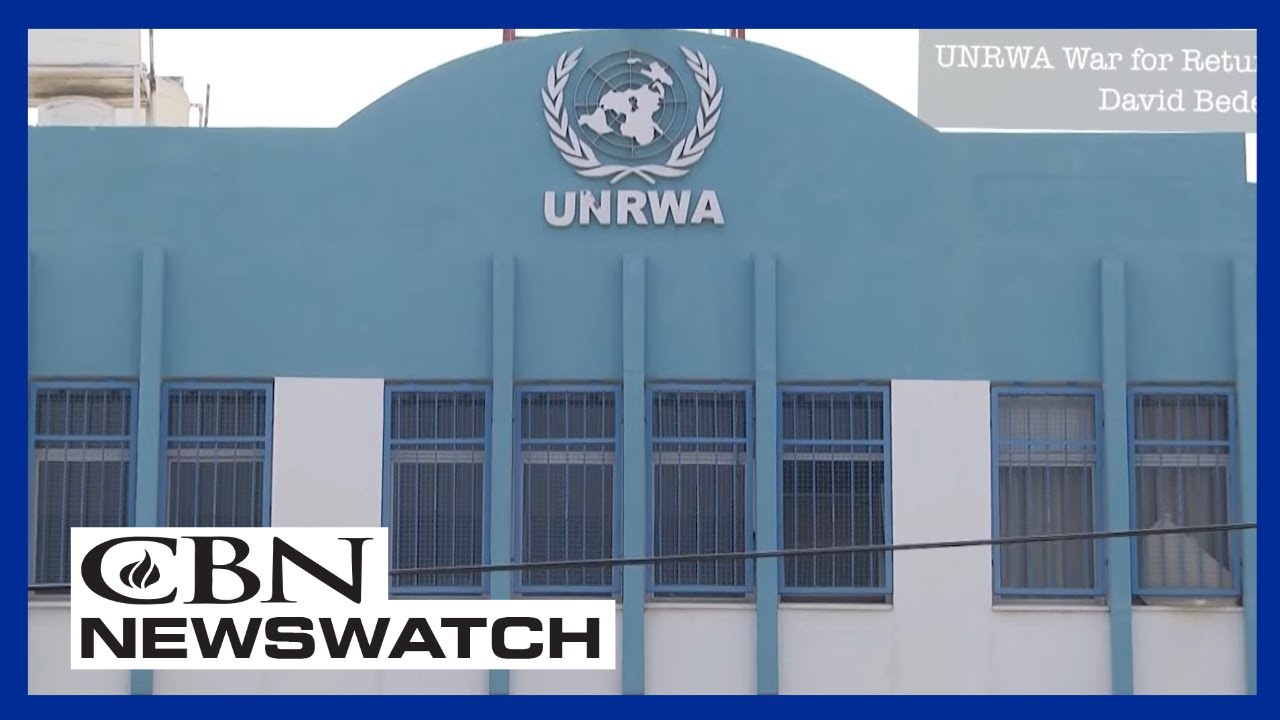
In a sweeping and intensifying investigation that is sending shockwaves through Washington and the international aid community, a US government watchdog is expanding its probe into alleged terrorist ties within a major United Nations relief agency—raising profound questions about oversight, accountability, and the integrity of global humanitarian funding.
According to extensive reporting on Tuesday by The New York Post, the Office of the Inspector General (OIG) for the now-defunct US Agency for International Development (USAID) is actively investigating more than 100 officials associated with the United Nations Relief and Works Agency for Palestine Refugees in the Near East (UNRWA). These individuals are suspected of having links to Hamas or, in some cases, direct involvement in the October 7, 2023 terrorist attacks that killed dozens of American citizens.
The scope of the investigation, described by officials as “expanding,” signals a potentially unprecedented breach of trust within an international institution tasked with delivering humanitarian aid. It also underscores the growing determination among US authorities to scrutinize foreign aid programs for vulnerabilities to fraud, abuse, and extremist infiltration.
The probe, which has been quietly gathering momentum, has already yielded troubling findings. As reported by The New York Post, investigators have identified at least 14 UNRWA employees with confirmed affiliations to Hamas. Additionally, two more individuals have been referred for debarment—a punitive measure that would bar them from receiving US funding for a decade.
One former employee has already been placed on a federal blacklist, effectively cutting off access to American financial resources.
Yet officials caution that these figures may represent only the tip of the iceberg. A US diplomat familiar with the investigation told The New York Post that the list of individuals under scrutiny continues to grow, suggesting a deeper and more systemic problem within the agency.
“USAID is investigating over 100 UNRWA officials for both ties to Hamas and participation in the October 7th terrorist attacks,” the diplomat stated, emphasizing the dual nature of the allegations—both ideological affiliation and operational involvement.
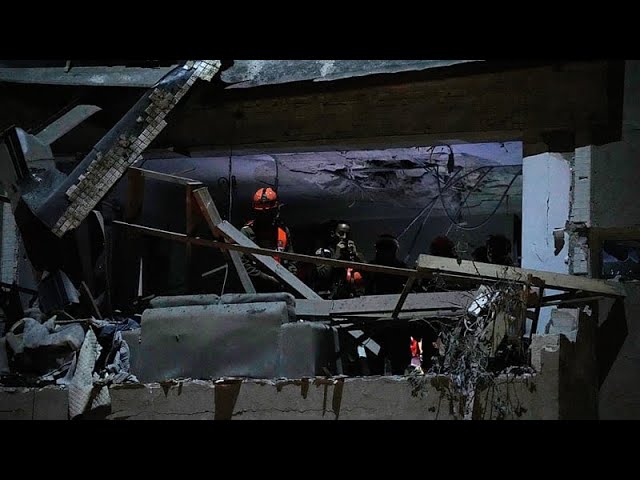
The investigation’s urgency is inextricably linked to the events of October 7, 2023, when Hamas launched a coordinated assault that resulted in the deaths of numerous civilians, including dozens of Americans. The possibility that individuals connected to a UN-affiliated aid organization may have participated in—or supported—such an attack has provoked outrage among US policymakers.
For many in Washington, the revelations validate longstanding concerns about the potential for extremist groups to exploit humanitarian frameworks. As The New York Post has repeatedly noted, the intersection of aid delivery and security risks has become an increasingly contentious issue in recent years.
The Trump administration has responded with decisive measures. In February 2025, President Donald Trump issued an executive order halting all US funding to UNRWA, a move that effectively severed a financial pipeline that had contributed hundreds of millions of dollars to the agency.
Despite the US withdrawal, UNRWA has continued to receive substantial funding—more than $839 million—through the broader United Nations system, according to figures cited by The New York Post. The decision to defund the agency has been met with both praise and criticism. Supporters argue that it reflects a necessary recalibration of US foreign aid priorities in light of security concerns. Critics, however, warn that it could exacerbate humanitarian crises in regions dependent on UNRWA’s services.
Senator Jim Risch, chairman of the Senate Foreign Relations Committee, has been among the most vocal advocates for the administration’s approach. In a statement highlighted by The New York Post, Risch asserted that the evidence of UNRWA’s ties to terrorism is “undeniable” and commended the administration for taking action. “I am glad to see President Trump’s USAID Office of the Inspector General conduct its own investigations to ensure bad actors like UNRWA don’t get taxpayer dollars,” he said.
At the center of the unfolding investigation is the USAID Office of Inspector General, an entity that has continued its operations despite the closure of USAID itself. Led by Deputy Inspector General Adam Kaplan, the office has positioned itself as a critical watchdog over US foreign aid programs.
Kaplan is scheduled to present findings from the UNRWA investigation, along with insights from 149 active inquiries, to members of the House Foreign Affairs Oversight and Intelligence Subcommittee. As reported by The New York Post, his testimony is expected to detail a wide range of alleged misconduct, including bribery schemes and financial fraud totaling hundreds of millions of dollars. “I am proud to say that even in a year of vast change, USAID OIG has continued to achieve unprecedented results,” Kaplan stated in prepared remarks. His testimony underscores a broader argument: that robust oversight mechanisms are essential, even—or perhaps especially—in times of institutional upheaval.
The UNRWA investigation is part of a larger portfolio of cases that collectively paint a troubling picture of vulnerabilities within foreign aid systems. According to The New York Post, recent OIG investigations have uncovered a series of high-profile fraud schemes.
In one case, three business owners and a USAID contracting officer pleaded guilty to defrauding taxpayers of $550 million over a decade. Another investigation led to the indictment of two foreign nationals accused of diverting $650 million intended for HIV/AIDS programs in Kenya.
These efforts, Kaplan noted, helped preserve $32 million in legitimate aid funding—a reminder that oversight not only identifies wrongdoing but also safeguards resources for their intended purposes.
Additional findings include the dismantling of a visa fraud ring spanning Central and South America, which defrauded victims of more than $2.5 million, and revelations that billions of dollars in aid to Ukraine may have been improperly distributed.
Despite its active role, the future of the USAID OIG remains uncertain. The office was notably absent from a new organizational chart issued by the State Department following USAID’s closure, raising questions about its long-term viability. A legislative proposal introduced in May 2025—and re-circulated earlier this year—calls for the abolition of the OIG and the transfer of its responsibilities to the State Department’s inspector general.
However, as The New York Post reported, this proposal has encountered resistance from lawmakers, some of whom view the OIG’s specialized capabilities as indispensable. The office’s global presence, with personnel stationed in regions such as Ukraine, Israel, and South Africa, enables real-time oversight that would be difficult to replicate.
The expanding investigation into UNRWA has far-reaching implications for the future of international aid. At its core, the controversy raises fundamental questions about how humanitarian organizations can operate in politically volatile environments without becoming entangled in local conflicts.
For the United States, the challenge is particularly acute. As one of the world’s largest donors, it must balance the imperative to provide assistance with the need to ensure that funds do not inadvertently support extremist activities.
The findings reported by The New York Post suggest that achieving this balance may require more stringent vetting processes, enhanced monitoring mechanisms, and closer coordination with intelligence agencies.
As the investigation continues to unfold, it is likely to intensify scrutiny not only of UNRWA but of the broader ecosystem of international aid. The allegations—if substantiated—represent a profound breach of trust that could reshape public perceptions of humanitarian institutions.
At the same time, the work of the USAID OIG highlights the importance of vigilance and accountability. In an era marked by complex geopolitical challenges, ensuring the integrity of aid programs is not merely a bureaucratic concern—it is a matter of national security.
For policymakers, the task ahead will be to translate the lessons of this investigation into meaningful reforms. For the public, the revelations serve as a stark reminder of the stakes involved.
As The New York Post has consistently emphasized, the intersection of aid, politics, and security is fraught with challenges. Navigating this terrain requires not only resources but also resolve.
The expanding probe into UNRWA stands as one of the most consequential investigations in recent memory, with implications that extend far beyond the immediate allegations. It touches on questions of governance, accountability, and the ethical responsibilities of institutions entrusted with global welfare.
Whether the investigation ultimately leads to systemic reform or deeper controversy remains to be seen. What is clear, however, is that the issues it has brought to light will not easily fade.
In the words of those closely following the case, as reported by The New York Post, this is not merely an inquiry—it is a reckoning.