








|
Getting your Trinity Audio player ready...
|
By: Jeff Gorman
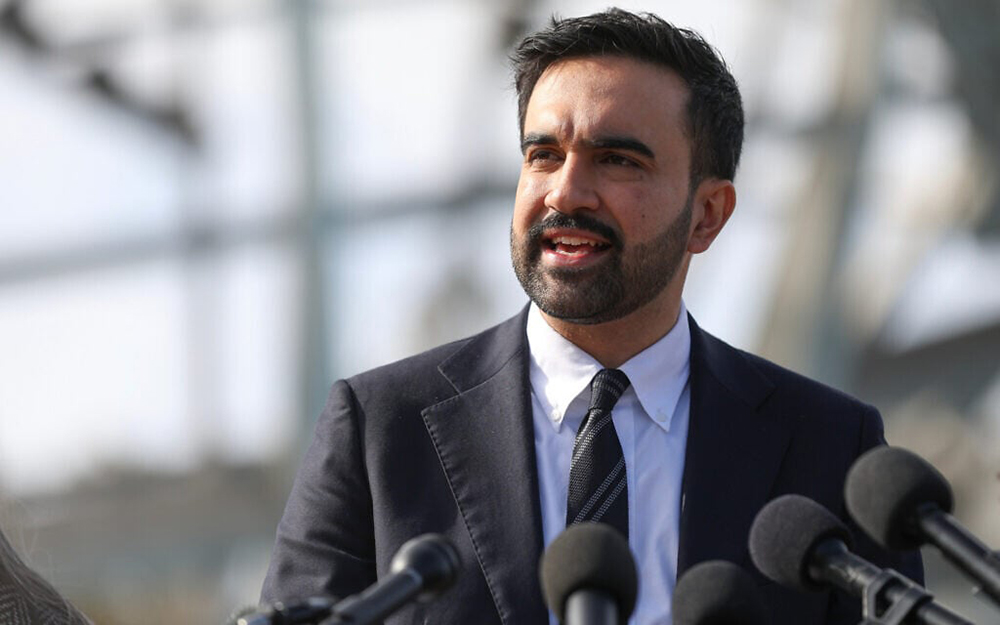
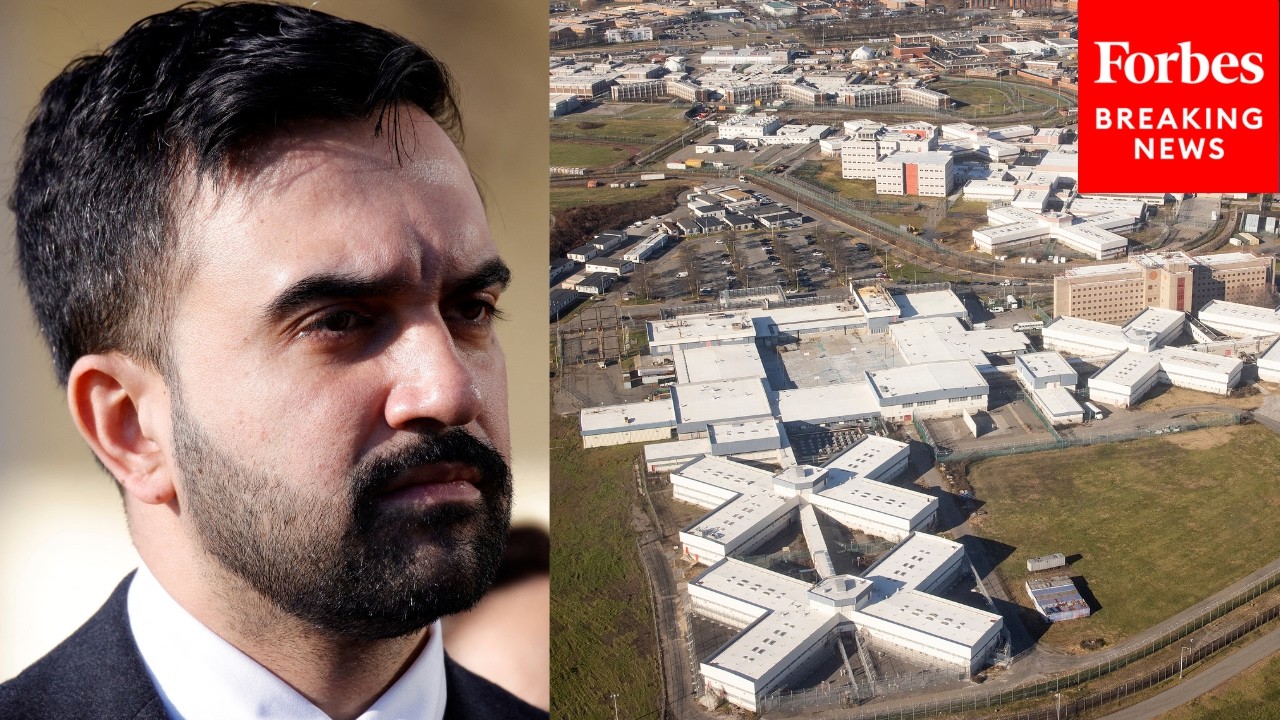
In a city long accustomed to political symbolism and high-profile gestures, New York City Mayor Zohran Mamdani has found himself at the center of a contentious public debate following an unprecedented visit to Rikers Island during Ramadan. What was intended, according to the mayor, as a deeply personal and unifying act has instead ignited sharp criticism, raising broader questions about leadership priorities, public messaging, and the delicate balance between empathy and governance.
As reported on Saturday by VIN News, Mamdani joined inmates and correctional staff at the city’s notorious jail complex to break his daily fast in observance of Ramadan. The event, which included an iftar meal shared with detainees, marked the first time a sitting New York City mayor has participated in such a religious observance within the facility. For Mamdani, the evening was, in his own words, “one of the most meaningful” of his tenure—an expression of both his personal identity and his vision for a more inclusive civic culture.
Yet the symbolism of the moment has proven polarizing. VIN News has chronicled a wave of criticism from law enforcement officials, political commentators, and segments of the public who question whether the mayor’s actions reflect appropriate priorities amid ongoing concerns about crime and public safety.
Mayor Mamdani framed his visit as an embodiment of his identity as a Muslim New Yorker and as part of a broader effort to affirm dignity and shared humanity across all segments of the population—including those incarcerated. According to VIN News, the mayor emphasized that the act of breaking fast together carries profound spiritual and communal significance, transcending social and institutional boundaries.
The event itself was carefully organized, involving not only inmates but also members of the Department of Correction. Officials confirmed, as noted by VIN News, that the meals provided for the occasion were donated and did not impose any cost on taxpayers—a detail likely intended to preempt concerns about public expenditure.
Supporters of the mayor have pointed to the visit as a tangible demonstration of his commitment to community engagement and reform. In particular, they highlight his longstanding pledge to close the Rikers Island facility, which has been the subject of intense scrutiny due to reports of violence, overcrowding, and systemic deficiencies. From this perspective, the iftar gathering represents not merely a symbolic act but a continuation of a broader policy agenda aimed at rethinking the city’s approach to incarceration.
Despite these intentions, the reaction from critics has been swift and pointed. VIN News reports that detractors have focused on what they perceive as an imbalance in the mayor’s public engagements, arguing that his outreach to incarcerated individuals has not been matched by comparable gestures toward victims of crime or injured law enforcement personnel.
Some critics have drawn attention to the absence of widely publicized visits by the mayor to police officers wounded in the line of duty, suggesting that such omissions send an unintended message about the administration’s priorities. Others have referenced Mamdani’s earlier visit to the family of a man who was shot by police after allegedly attacking officers with a knife—an action that, while framed by the mayor as an expression of compassion, has been interpreted by some as insufficiently supportive of law enforcement.
VIN News has highlighted the intensity of these critiques, noting that they reflect deeper tensions within the city regarding policing, criminal justice, and the role of elected officials in navigating these complex and often emotionally charged issues.
The choice of Rikers Island as the setting for the mayor’s Ramadan observance adds another layer of significance to the controversy. The facility, long emblematic of the challenges facing New York’s correctional system, occupies a unique place in the city’s public consciousness. For some, it represents a site of systemic failure in need of urgent reform; for others, it is a necessary component of maintaining public safety.
The VIN News report stressed that any high-profile event at Rikers inevitably carries symbolic weight, amplifying its impact and shaping public interpretation. In this context, Mamdani’s visit has been viewed through multiple lenses: as an act of solidarity with marginalized populations, as a statement of religious identity, and, for critics, as a potential misstep in political judgment.
Defenders of the mayor have sought to reframe the narrative, emphasizing that engagement with incarcerated individuals does not preclude support for law enforcement or crime victims. According to the VIN News report, supporters argue that Mamdani’s actions reflect a holistic approach to governance—one that recognizes the interconnectedness of social issues and seeks to address them through inclusive and compassionate policies.
They also point to the mayor’s broader agenda, which includes efforts to reform the criminal justice system, reduce recidivism, and improve conditions within correctional facilities. In this light, the iftar gathering can be seen as part of a larger effort to humanize a system often criticized for its dehumanizing effects.
Moreover, supporters contend that the mayor’s willingness to engage directly with incarcerated individuals demonstrates a level of accessibility and commitment that is often lacking in political leadership. VIN News has reported that some community leaders have praised the visit as a bold and necessary step toward fostering dialogue and understanding.
The controversy surrounding Mamdani’s visit highlights the challenges inherent in modern urban governance, where symbolic actions can carry significant political consequences. As VIN News has observed, mayors must navigate a complex landscape of competing expectations, balancing the demands of public safety, social justice, and community cohesion.
In this case, the mayor’s attempt to emphasize unity and dignity has collided with concerns about public perception and the optics of leadership. The absence of a direct response from the mayor’s office to the criticism has further fueled debate, leaving observers to interpret the administration’s stance through its actions rather than its words.
As the debate continues, the episode serves as a microcosm of broader societal tensions—between compassion and accountability, symbolism and substance, inclusion and perception. VIN News has consistently framed the story as emblematic of the difficult choices facing contemporary leaders, particularly in cities as diverse and dynamic as New York.
For Mayor Mamdani, the visit to Rikers Island may indeed have been a moment of personal and professional significance. Whether it will ultimately be remembered as a gesture of meaningful leadership or as a politically costly miscalculation remains to be seen.
What is certain, however, is that the conversation it has sparked will endure, shaping both public discourse and the evolving narrative of leadership in one of the world’s most closely watched cities.



1 Comment
Jane
April 9, 2026Sorry people, this is just so wrong. NY has thousands of Muslims praying daily in the streets rather than than in the mosques surrounding them. The mayor publicizes his religious observance by sharing a break fast meal with fellow Muslim inmates and guards. Yes, America is a melting pot that welcomes people from all walks of life, but doesn’t anyone see this and what’s happening in many other US cities as the Islamic takeover of America???????? Christians, Jews, Buddhists and Hindus do not do this. Think about that. Wake up everyone!!!