



























|
Getting your Trinity Audio player ready...
|
By: Meyer Wolfsheim
A quiet suburban neighborhood in Rockland County has been left shaken after a U.S. Postal Service worker was accused of violently shoving a 4-year-old Jewish boy to the ground — an incident that, as the NY Post reported, has sparked anger and fear among local residents who say the man had a troubling history of aggressive behavior.
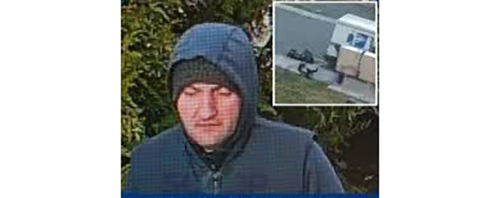
The disturbing encounter unfolded in Ramapo, a community with a large Orthodox Jewish population, where families say children frequently gather outside as neighbors go about their daily routines. According to the NY Post report, surveillance footage captured the moment the postal worker allegedly turned and forcefully pushed the young boy, knocking him onto the pavement and sending his yarmulke flying.
Though the child was not seriously injured and was able to get back up quickly, the incident has reverberated throughout the neighborhood. As the NY Post reported, many residents described the accused mailman, identified as 39-year-old Gabriel Stan, as someone known for volatile outbursts and confrontational behavior long before the incident involving the child.
Neighbors who spoke to the NY Post painted a picture of a man with a temper that often flared without warning. One local father recounted a tense exchange, saying the postal worker became enraged when approached politely. Others echoed similar experiences, claiming he would frequently shout or lash out during routine interactions. As the NY Post reported, residents used stark language to describe him, calling him “not nice” and even comparing his demeanor to that of an “animal” with a dangerously short fuse.
The alleged assault itself unfolded quickly. Video cited by the NY Post report shows the young boy approaching a mailbox area near the postal truck — a common curiosity for neighborhood children — before the worker suddenly turned and shoved him with both hands. The boy fell backward but quickly regained his footing, retrieved his head covering, and moved away as other children scattered.
Authorities responded by arresting the postal worker and charging him with offenses including assault and endangering the welfare of a child. As the NY Post reported, additional charges were later considered amid public outrage over the incident. Despite the intensity of the reaction, law enforcement officials have stated that the case is not currently being treated as a hate crime.
That decision has done little to calm community concerns. Residents say the attack, regardless of legal classification, has left families unsettled — particularly given the young age of the victim and the apparent lack of provocation. As the NY Post report emphasizes, the neighborhood was filled with children at the time, many preparing for the upcoming Passover holiday, making the incident all the more alarming.
Further fueling frustration is uncertainty surrounding the postal worker’s employment status. The U.S. Postal Service confirmed, according to the NY Post report, that the man remained employed but declined to provide details, citing internal policy.
For many in Ramapo, the episode has become more than a single act of violence — it has raised broader questions about accountability and safety. As the NY Post reported, residents are now grappling with how someone they describe as repeatedly hostile was allowed to continue interacting with the public, especially in a neighborhood filled with young families.