






















|
Getting your Trinity Audio player ready...
|
By: Jerome Brookshire
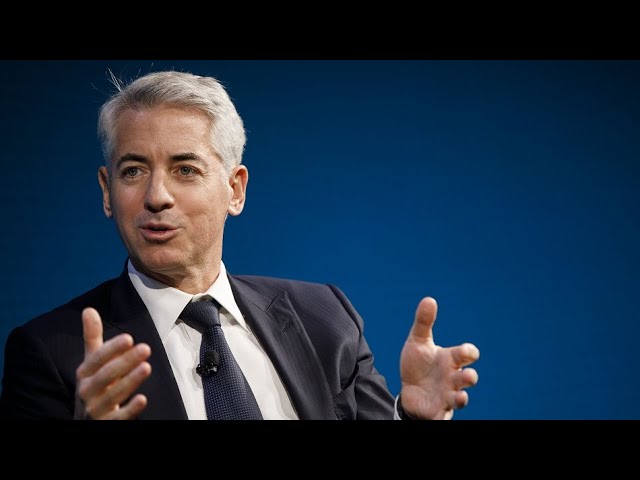
In a bold strategic maneuver that could reshape the landscape of modern asset management, outspoken hedge fund titan Bill Ackman has taken a decisive step toward realizing a long-cherished ambition: transforming his investment empire into a publicly traded platform modeled after the legendary structure created by Warren Buffett at Berkshire Hathaway.
Pershing Square Capital Management, Ackman’s hedge fund firm, formally filed plans this week to list on the New York Stock Exchange under the ticker symbol “PS,” a move that would for the first time allow public investors to purchase equity stakes in the firm’s broader investment enterprise. The filing signals a potentially transformative moment for Ackman’s two-decade-old investment platform and represents the culmination of years of planning aimed at creating a permanent capital vehicle capable of compounding wealth over generations.
According to a detailed report on Tuesday by CNBC, the proposed listing will involve a distinctive dual-structure offering designed to give investors multiple pathways to participate in Pershing Square’s strategy. Both the firm’s common shares and the shares of its closed-end investment fund, known as PSUS, will trade on the New York Stock Exchange simultaneously, though as separate securities.
This structural approach reflects Ackman’s attempt to blend traditional hedge-fund investing with the long-term permanence and shareholder alignment that have made Berkshire Hathaway one of the most successful corporate entities in modern financial history.
The public listing marks a watershed moment for Pershing Square Capital Management, which has historically operated as a private hedge fund firm catering primarily to institutional clients and ultra-wealthy investors.
If the offering proceeds as planned, public investors—both institutional and retail—will gain the ability to participate in the investment decisions and portfolio performance of Ackman’s organization for the first time.
As CNBC reported, Pershing Square’s investment portfolio currently includes substantial positions in prominent global companies such as Brookfield, Uber, and Amazon. The firm has long favored a concentrated investment approach, typically holding a relatively small number of high-conviction positions rather than the diversified portfolios common among traditional mutual funds.
Ackman’s strategy emphasizes activist engagement with corporate management, long-term capital allocation discipline, and the pursuit of significant value creation over extended time horizons.
The NYSE listing would institutionalize that strategy within a permanent corporate framework, allowing the firm to access broader capital markets and maintain stable funding regardless of short-term investor sentiment.
According to the filing detailed in the CNBC report, the offering is structured to raise between $5 billion and $10 billion through the issuance of shares in the closed-end fund PSUS.
Investors participating in the initial offering will be able to purchase PSUS shares at $50 per share, with an additional incentive built into the structure. For every 100 PSUS shares purchased, investors will receive 20 shares of Pershing Square Capital Management’s common stock at no additional cost.
The combined structure is intended to align investors with both the investment portfolio and the management entity that oversees it.
The firm disclosed that there has previously been no public market for Pershing Square’s common stock, making the combined offering a landmark event in the firm’s history.
Early demand for the offering appears substantial. Pershing Square reported that it has already secured $2.8 billion in commitments from investors ahead of the public launch.
These commitments come from a diverse array of institutional participants, including family offices, pension funds, insurance companies, and ultra-high-net-worth individuals, according to the report by CNBC.
At the core of Ackman’s strategy lies a concept that has fascinated him for years: permanent capital.
Traditional hedge funds operate on a model in which investors can periodically redeem their capital. While this structure provides flexibility for clients, it can create significant challenges for fund managers during periods of market volatility.
If large numbers of investors withdraw funds during a downturn, managers may be forced to sell assets at unfavorable prices in order to meet redemption requests.
Permanent capital eliminates that risk.
By raising capital through publicly traded vehicles rather than redeemable partnerships, a firm can invest with a much longer time horizon, allowing it to capitalize on market dislocations rather than being constrained by them.
In its regulatory filing, Pershing Square explained the advantage clearly.
“Permanent capital allows us to take a long-term view and be opportunistic during periods of market volatility, without being exposed to the need to raise capital by selling assets to meet redemptions,” the company stated, according to coverage by CNBC.
Ackman has been candid about the inspiration behind his strategy.
For decades, he has openly described himself as a devoted student of Warren Buffett, the chairman and chief executive of Berkshire Hathaway.
Buffett, widely regarded as one of the greatest investors in history, began his career running a series of private investment partnerships in the 1950s and 1960s. In many respects, those early partnerships resembled modern hedge funds.
However, Buffett ultimately shut down those partnerships and instead took control of Berkshire Hathaway, then a struggling textile manufacturer. Over time, Buffett transformed Berkshire into a massive investment conglomerate, using the company’s permanent capital base to acquire stakes in businesses across multiple industries.
Ackman has frequently cited that transformation as the conceptual model for his own ambitions.
As CNBC has reported, Ackman has often referred to Buffett as his “unofficial mentor.” He has attended Berkshire Hathaway’s annual shareholder meetings in Omaha for years and has studied Buffett’s investment philosophy extensively.
Ackman’s ultimate goal appears to be the creation of a similarly durable investment institution—one capable of compounding capital over decades rather than merely generating annual returns for short-term investors.
The current listing effort follows an earlier attempt by Pershing Square to raise an even larger sum.
In 2024, Ackman sought to launch a closed-end fund that could raise as much as $25 billion from investors. That ambitious plan ultimately collapsed after failing to secure sufficient investor demand.
Rather than abandoning his vision, Ackman pivoted.
He increased Pershing Square’s stake in Howard Hughes Holdings, a real estate development company, viewing it as a potential platform for acquiring controlling stakes in other businesses.
That move reflected Ackman’s broader ambition to transition Pershing Square from a traditional hedge fund into a more diversified investment holding company.
The current NYSE listing represents the latest—and perhaps most consequential—phase of that evolution.
Another intriguing aspect of Ackman’s strategy is his growing engagement with retail investors. Over the past several years, Ackman has cultivated a substantial following on the social media platform X, where he now boasts more than two million followers.
Unlike many hedge fund managers who operate largely behind closed doors, Ackman frequently communicates directly with the public, discussing market developments, economic policy, and investment philosophy.
This visibility could play a significant role in attracting retail investors to the Pershing Square offering. As the CNBC report noted, PSUS will represent the firm’s first investment vehicle explicitly marketed to both institutional and retail investors.
By opening the door to smaller investors, Ackman hopes to replicate—at least in part—the shareholder culture that has developed around Berkshire Hathaway.
Buffett’s annual shareholder meetings in Omaha have become legendary gatherings attended by tens of thousands of devoted investors.
Ackman has often expressed admiration for that model and may hope to cultivate a similar community around Pershing Square.
Despite the excitement surrounding the proposed listing, analysts caution that the venture carries significant risks. The hedge fund industry has historically been dominated by private partnerships, and publicly traded investment managers have sometimes struggled to maintain consistent valuations.
Moreover, Ackman himself has experienced both spectacular successes and notable setbacks throughout his career. His early investments in companies such as Canadian Pacific Railway generated enormous profits for Pershing Square. Yet other high-profile bets—most famously his short position against the nutritional supplement company Herbalife—proved controversial and costly.
Nonetheless, Ackman remains one of the most influential figures in modern finance, known for his bold investment theses and willingness to challenge corporate management.
If Pershing Square successfully completes its NYSE listing, the transaction could mark one of the most consequential developments in the hedge fund industry in years. By creating a publicly traded investment platform with permanent capital, Ackman would take a significant step toward building the kind of enduring financial institution that has long fascinated him.
As CNBC has emphasized in its coverage, the offering represents more than a routine capital-raising exercise. It is, in many respects, an attempt to reshape the architecture of modern investing.
For Ackman, the stakes are not merely financial. They are historical.
After two decades of building Pershing Square into one of the most recognizable hedge funds in the world, he is now attempting something far more ambitious: constructing an investment institution capable of surviving—and thriving—for generations to come. Whether Pershing Square ultimately achieves the enduring stature of Berkshire Hathaway remains uncertain.
But with this NYSE filing, Ackman has unmistakably declared his intention to try.