
























|
Getting your Trinity Audio player ready...
|
By: Jerome Brookshire
A sweeping new assessment of antisemitism on American college campuses has cast an unflattering spotlight on several prestigious institutions, including Bowdoin College and The New School, both of which received poor marks in the Anti-Defamation League’s latest evaluation of university responses to anti-Jewish hostility. The report, discussed and cited by The New York Post on Wednesday, has intensified the national debate over antisemitism in higher education, the political culture of elite universities, and the responsibilities of academic leadership in safeguarding Jewish students.
The Anti-Defamation League (ADL) released its third annual campus report card on combating antisemitism, evaluating 135 colleges and universities across the United States. The results reveal a complex and uneven landscape: while many schools have taken meaningful steps to address anti-Jewish discrimination and harassment, others continue to struggle with what the organization describes as entrenched hostility toward Jewish and pro-Israel students.
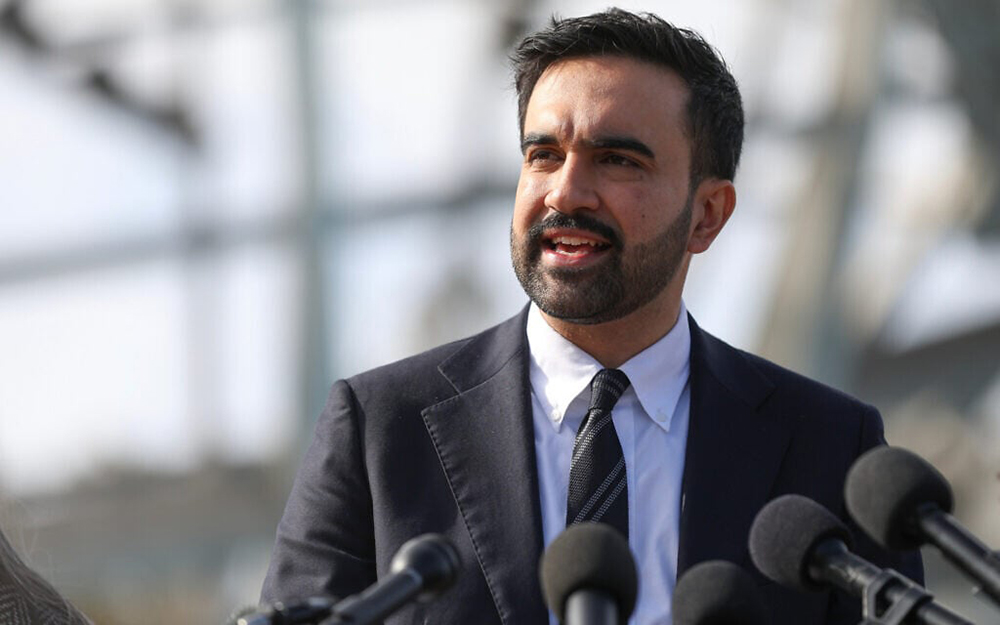
Among the institutions drawing particular attention were Bowdoin College—alma mater of New York City Mayor Zohran Mamdani—and The New School in Manhattan. Bowdoin received a “D” grade, while The New School earned an “F,” marking the third consecutive year it has failed the ADL’s evaluation.
The findings, first highlighted in coverage by The New York Post, have fueled renewed scrutiny of the ideological climate on campuses where anti-Israel activism has increasingly intersected with accusations of antisemitism.
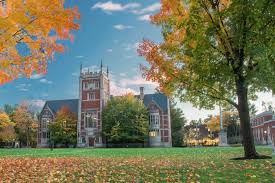
Bowdoin College, a highly regarded liberal arts institution located in Brunswick, Maine, has long cultivated a reputation for academic rigor and progressive activism. With tuition and associated costs approaching $94,000 annually, it stands among the most expensive colleges in the United States.
Yet despite its prestige, the ADL’s latest report indicates that Bowdoin’s performance in addressing antisemitism has deteriorated.
According to details reported by The New York Post, Bowdoin’s grade dropped from a “C” in 2025 to a “D” in 2026, reflecting what the ADL described as persistent problems involving hostile anti-Zionist groups and campus activism that has created an uncomfortable environment for Jewish students.
The report highlighted the presence of Students for Justice in Palestine (SJP)—a controversial organization that advocates for boycotts and sanctions against Israel—as a key factor in the campus climate.
Mayor Mamdani himself played a role in the organization’s presence at Bowdoin during his student years, founding a chapter of the group while attending the college. Critics argue that some SJP chapters have blurred the line between political advocacy and rhetoric that can foster hostility toward Jewish students. Supporters counter that the group merely promotes Palestinian rights and legitimate political debate.
The ADL’s report cited a specific incident that took place in February 2025, when activists established an anti-Israel encampment inside Bowdoin’s Student Center. Protesters called for the college to divest from companies linked to Israel and to support broader boycotts.
As reported by The New York Post, such demonstrations were among the factors cited by the ADL as evidence of an increasingly hostile environment on campus.
While Bowdoin’s declining score raised concerns, the situation at The New School in New York City drew even sharper criticism.
The progressive university in Greenwich Village received an “F” grade for the third consecutive year, making it one of the lowest-ranked institutions in the ADL’s evaluation. The report cited what it described as a “level of severe antisemitic and anti-Zionist incidents” on campus.
According to the information provided in The New York Post report, one incident involved the distribution of leaflets bearing the slogan “Hillel Funds Genocide.” Hillel is one of the largest Jewish campus organizations in the world and provides cultural, religious, and educational programming for Jewish students.
The leaflets, which appeared across the campus in November 2025, were widely condemned by Jewish advocacy groups as inflammatory and harmful.
The ADL also pointed to the presence of activist organizations whose rhetoric it characterized as hostile toward Israel and, by extension, toward Jewish students who identify strongly with the Jewish state.
The New School rejected the ADL’s assessment, issuing a statement defending its record and highlighting efforts to improve campus conditions. “The ADL’s recent grading of The New School in its ‘Report Card on Anti-Semitism’ does not reflect who we are today,” the university said in remarks quoted by The New York Post.
The school emphasized its commitment to ensuring a welcoming environment for all members of its community. “The university has taken clear and impactful steps and made strong progress in creating values-driven policies, resources and programming to eliminate any form of discrimination and harassment against our Jewish community,” the statement continued. Administrators argued that the institution’s core values—fairness, openness, and equality—remain central to its mission.
Nevertheless, critics contend that such assurances ring hollow when incidents continue to occur.
While the poor grades at Bowdoin and The New School generated headlines, the ADL’s report also revealed signs of improvement across many universities.
According to figures cited by The New York Post, 58 percent of the institutions evaluated in 2026 received grades of A or B, a significant increase from previous years.
In 2024, only 23 percent of schools achieved those higher marks.
The improvements suggest that the ADL’s report card system may be encouraging universities to take more proactive steps to combat antisemitism.
Several New York-area schools recorded notable gains.
New York University improved from a B in 2025 to an A in 2026, while Baruch College and Brooklyn College—both part of the City University of New York system—also advanced from B grades to A ratings.
Other institutions showing progress included Vassar College, which likewise moved into the A category.
Barnard College improved from a D to a B, while Columbia University rose from a D to a C.
Several public universities within the State University of New York (SUNY) system also performed well in the ADL evaluation.
According to The New York Post, SUNY Albany and Rockland Community College each earned A grades, while Stony Brook University, Binghamton University, and the University at Buffalo received B grades. These results suggest that some public institutions have made significant strides in implementing policies and programs designed to foster a safe environment for Jewish students.
Despite their global prestige, several Ivy League universities received only mediocre grades in the report. Harvard, Princeton, Yale, and Cornell each earned C grades, reflecting concerns about campus activism and administrative responses to antisemitic incidents. Critics argue that elite universities have struggled to balance commitments to free expression with the need to protect students from harassment.
For the ADL, the report card serves not merely as a ranking but as a call to action. ADL CEO Jonathan Greenblatt emphasized that universities have the power to improve campus climates if they demonstrate the necessary commitment. “The data confirms what we’ve said from the start: maintaining a safe campus climate is a matter of will,” Greenblatt said, according to statements cited by The New York Post.
He noted that institutions that implemented comprehensive strategies—reviewing policies, clarifying expectations, and strengthening enforcement—have achieved meaningful progress. “Some of the strongest gains are coming from institutions that have engaged deeply with our recommendations,” Greenblatt said, “and translated them into lasting institutional practice rather than symbolic commitments.”
The ADL report arrives at a moment when antisemitism on college campuses has become a major national concern. In recent years, debates over the Israeli-Palestinian conflict have intensified within academic settings, sometimes producing heated confrontations between student groups.
Jewish organizations have warned that anti-Israel activism can, in some cases, cross into rhetoric that marginalizes or intimidates Jewish students. Advocates for Palestinian rights argue that criticism of Israel should not automatically be labeled antisemitic.
The ADL’s report attempts to navigate this complex terrain by focusing on institutional policies, enforcement mechanisms, and the overall climate experienced by Jewish students.
As universities prepare for another academic year, the findings of the ADL’s report underscore both progress and persistent challenges. The improvements recorded at many institutions demonstrate that change is possible when administrations take antisemitism seriously.
Yet the troubling grades assigned to schools like Bowdoin and The New School serve as reminders that the problem remains far from resolved. For Jewish students navigating the charged political landscape of modern campuses, the stakes are not merely academic. They concern the fundamental question of whether universities—institutions dedicated to intellectual inquiry and mutual respect—can truly provide environments where all students feel secure and valued.
As The New York Post noted in its coverage of the report, the ADL’s evaluation has become an increasingly influential tool in shaping how universities respond to these challenges. And as the national conversation about antisemitism continues, the grades assigned to America’s most prominent campuses may serve as both a warning and a blueprint for change.