







|
Getting your Trinity Audio player ready...
|
Columbia Anti-Israel Group Sparks Outrage After Posting ‘Death to America’ Following Strike on Iran’s Supreme Leader
By: Julie Herndon
Columbia University has moved swiftly to distance itself from one of its most visible anti-Israel student organizations after the group posted the Persian phrase “Marg bar Amrika” — translated as “Death to America” — on social media in the aftermath of the U.S.-Israeli airstrikes that killed Iran’s Supreme Leader Ayatollah Ali Khamenei.
The controversial message, published Saturday by Columbia University Apartheid Divest (CUAD), ignited a fresh firestorm amid already heightened tensions on American campuses. According to a report that on Sunday in The New York Post, the post appeared on X, formerly Twitter, shortly after news broke that Khamenei had been killed in the joint operation. Though the platform removed the message, the organization subsequently doubled down rather than retracting the sentiment.
The phrase “Marg bar Amrika” has long been associated with the ideological lexicon of Iran’s Islamic Republic, dating back to the revolution of 1979 under Ayatollah Ruhollah Khomeini. The slogan has been chanted at state-sponsored rallies and has functioned as a rhetorical cornerstone of Iran’s official anti-American posture for decades. That it would be echoed by a student group operating under the name of an Ivy League institution has prompted widespread condemnation.
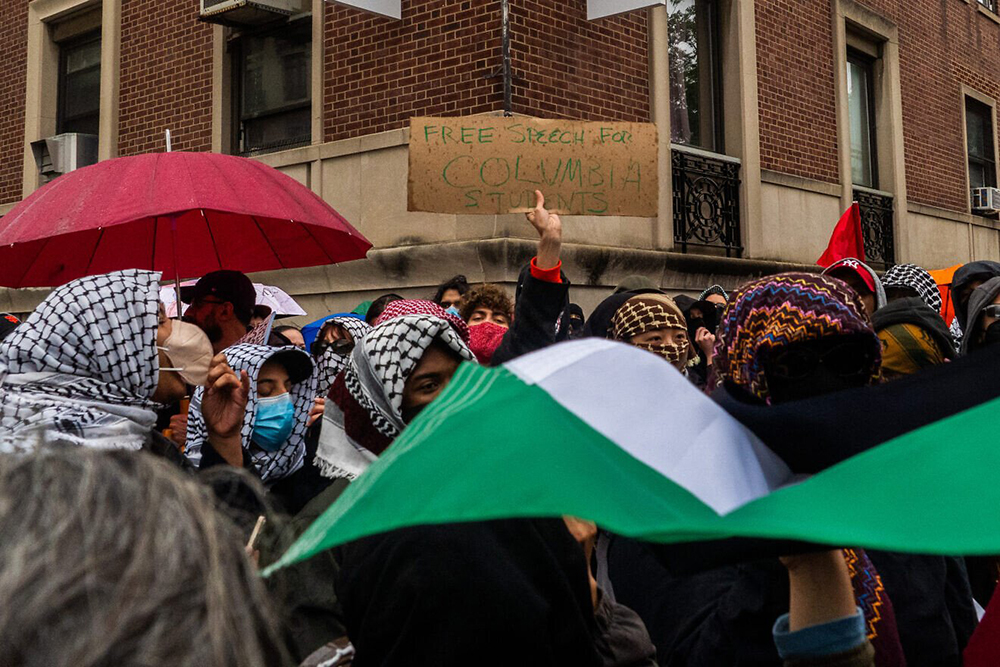
The New York Post reported that CUAD was among the most prominent student groups behind last year’s sprawling encampment at Columbia protesting Israel’s war in Gaza. The encampment became a focal point of national debate over antisemitism, academic freedom and campus activism. In that context, Saturday’s post was viewed by critics as a significant escalation from political protest into explicit endorsement of hostile rhetoric historically tied to a foreign regime.
Columbia University issued a statement emphasizing that CUAD “is not affiliated in any way with the University.” The school further stated there is “no evidence that anyone currently in control of their account is a current Columbia student, staff, or faculty member,” adding that the group is “illegally using the Columbia name.” The New York Post report noted that CUAD is not an officially recognized campus organization, a fact the administration underscored in its effort to separate the institution from the group’s actions.
The controversy is further amplified by the fact that CUAD had previously been publicly praised by Khamenei himself. As The New York Post report detailed, the Iranian leader had referenced American campus protests in 2024, commending students as part of what he described as a global “Resistance Front.” In remarks cited in the Jewish News Syndicate and recounted by The New York Post, Khamenei wrote that American students had “formed a branch of the Resistance Front” and had begun an “honorable struggle” in defiance of U.S. government policy.
He added at the time that “the people’s conscience has awakened on a global scale,” portraying the campus protests as evidence of moral clarity spreading beyond Iran’s borders. Those comments, once cited by activists as validation of their cause, now carry a darker resonance in light of Saturday’s events.
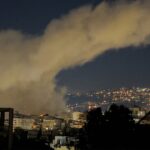
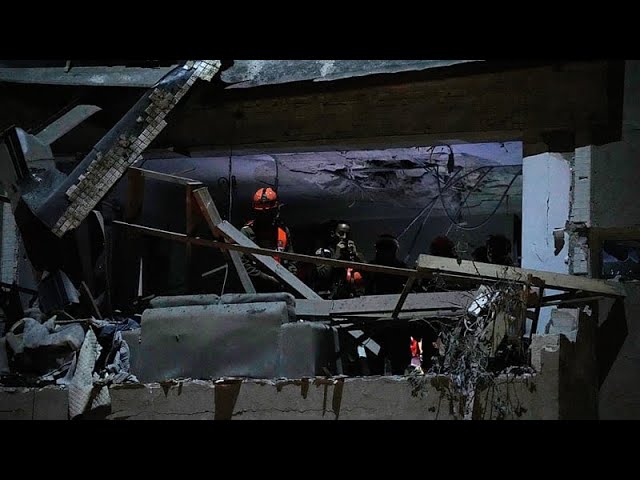
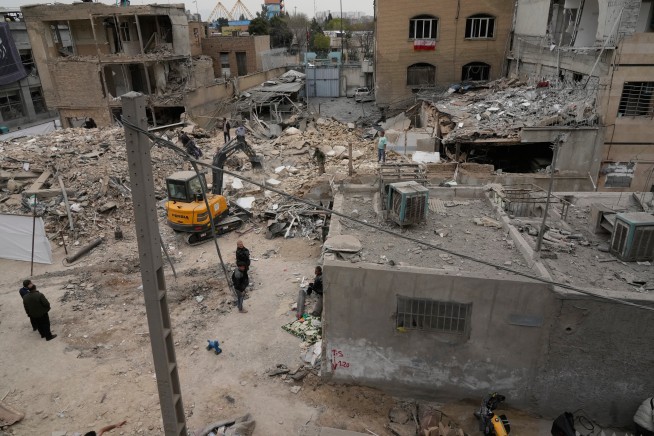
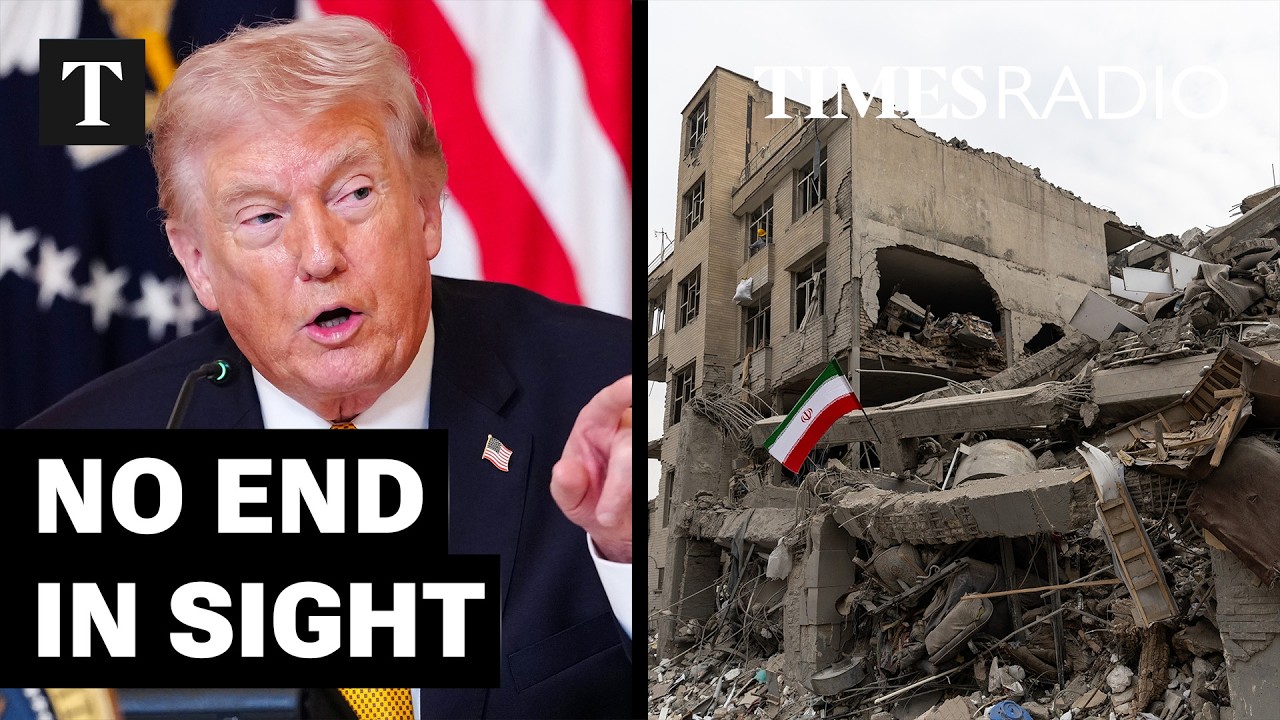
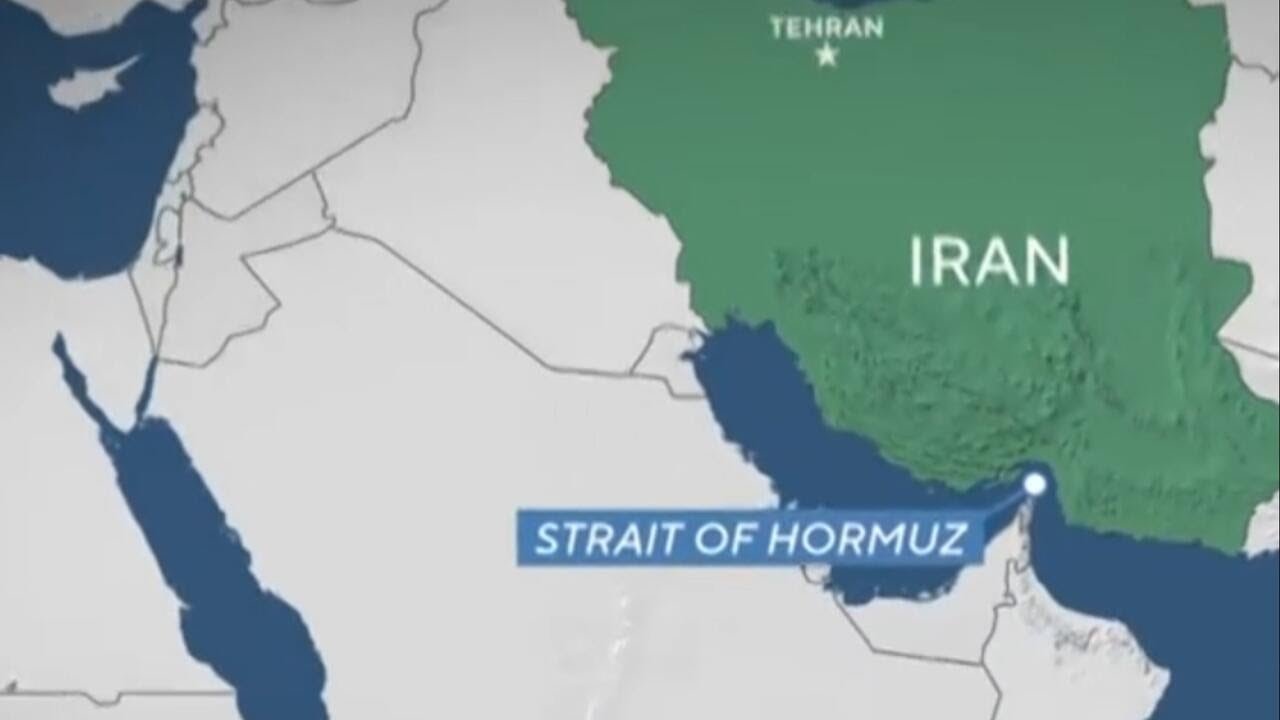
The U.S. and Israeli airstrikes that killed Khamenei came after diplomatic negotiations between Washington and Tehran collapsed. President Donald Trump had pressed Iran to agree to new constraints on its nuclear program, but talks broke down, leading to the launch of a large-scale operation targeting senior Iranian leadership and military infrastructure. In addition to Khamenei, Iranian former president Mahmoud Ahmadinejad was reportedly killed in the strikes. Ahmadinejad, who had previously called for Israel’s destruction and had recently been under house arrest following an alleged attempted coup, was among dozens of senior figures eliminated.
Israel also announced that 40 top Iranian military officials were killed, including the commander of the Revolutionary Guard and Iran’s defense minister. The scale of the operation has reshaped the geopolitical landscape, and reverberations are being felt domestically as well as internationally.
Within hours of CUAD’s post, alumni, donors and political figures began voicing alarm. The New York Post reported that critics described the slogan as not merely provocative but as an endorsement of violent extremism. Calls for disciplinary action circulated online, and some lawmakers urged federal scrutiny of campus organizations perceived to be promoting hostile foreign propaganda.
Supporters of CUAD, however, characterized the backlash as an attempt to silence dissent. They argued that the phrase was intended as symbolic resistance to U.S. foreign policy rather than a literal incitement. Nonetheless, the historical weight of the slogan — intertwined with decades of anti-American rhetoric from Tehran — has made such defenses difficult to sustain in the public sphere.
The episode unfolds against a backdrop of intense scrutiny of university campuses. The New York Post has repeatedly chronicled congressional hearings, donor revolts and administrative shakeups tied to allegations of antisemitism and extremist rhetoric at elite institutions. Columbia, in particular, has faced significant pressure following last year’s protests and subsequent administrative resignations.
University officials are acutely aware of the reputational stakes. In distancing itself from CUAD, Columbia sought not only to clarify the group’s unofficial status but also to reaffirm its institutional values. Yet critics contend that disclaimers may not suffice if campus culture continues to generate episodes of incendiary rhetoric.
The removal of the post by X did little to quell controversy. Screenshots circulated widely, ensuring that the message reached far beyond the platform’s moderation mechanisms. The New York Post report noted that CUAD’s subsequent refusal to retract or apologize compounded public outrage.
Beyond the immediate uproar, the incident raises broader questions about the boundaries between political activism and advocacy that appears to align with hostile foreign regimes. The invocation of a slogan historically associated with calls for violence against the United States carries implications that transcend ordinary protest.
Legal experts observe that while inflammatory speech is generally protected under the First Amendment, universities and platforms retain discretion to enforce codes of conduct and community standards. Whether Columbia will pursue further action against individuals associated with CUAD remains unclear.
For many observers, the episode reflects the increasingly polarized environment on American campuses, where global conflicts are refracted through local activism. The New York Post report documented how the Gaza war catalyzed encampments, counter-protests and heated debates about free expression and safety.
In this case, the killing of Khamenei — a figure long synonymous with anti-American and anti-Israeli rhetoric — became the catalyst for a message that appeared to mirror the very language he popularized. The irony has not been lost on commentators, who note the stark contrast between the university’s educational mission and the rhetoric of a foreign theocracy.
As investigations and internal reviews proceed, Columbia faces the delicate task of upholding free expression while condemning language widely perceived as endorsing violence.
In an era when global conflict and domestic discourse are increasingly intertwined, a single phrase posted online can ignite debate far beyond the confines of a campus quad. For Columbia, the challenge lies not only in managing the fallout but in confronting the deeper currents of political radicalization that have transformed universities into battlegrounds of international