























|
Getting your Trinity Audio player ready...
|
By: Ted Nussbaum
A catastrophic runway collision at New York City’s LaGuardia Airport has unleashed a cascade of operational turmoil, widespread flight cancellations, and renewed scrutiny of aviation safety protocols, as investigators race to determine the precise sequence of events that led to the deadly accident late Sunday night. The incident, involving an Air Canada Express regional jet and a Port Authority fire truck, has reverberated across the national air travel system, grounding hundreds of flights and raising urgent questions about air traffic control procedures at one of the country’s busiest airports.
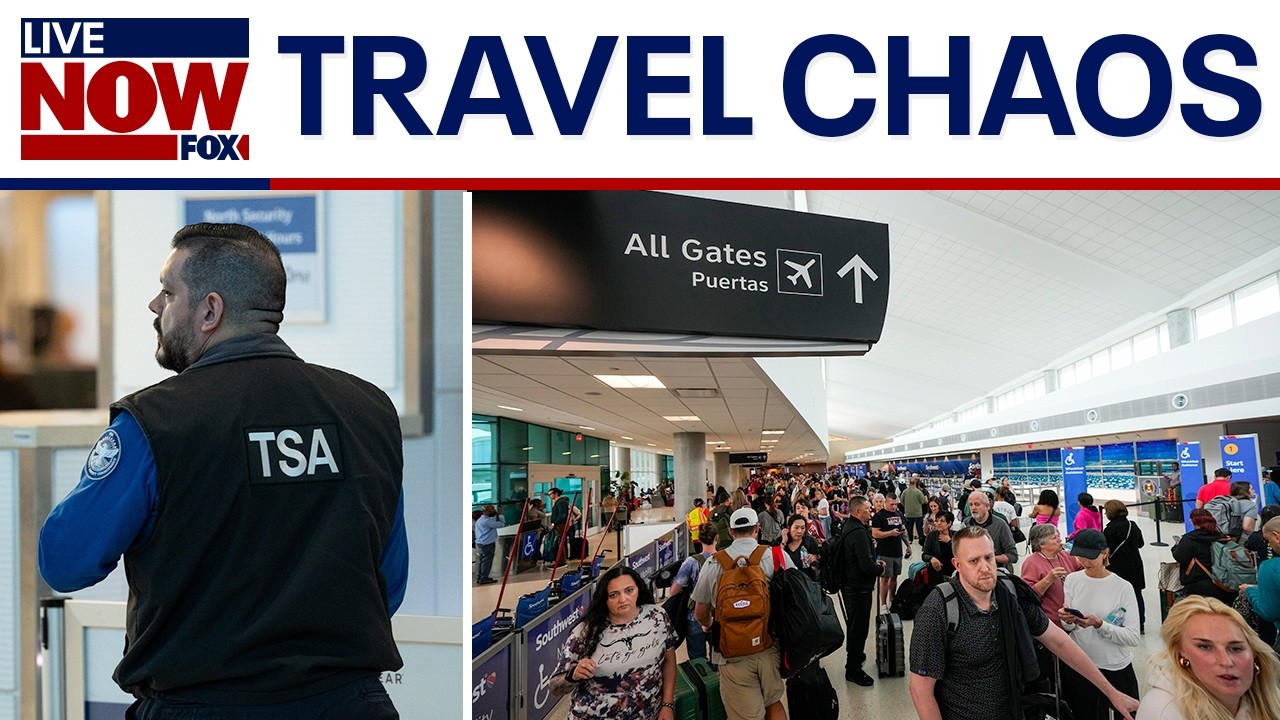
By mid-morning Monday, the scale of disruption had become unmistakably clear. According to data from FlightAware, at least 295 departing flights had been canceled at LaGuardia, with an additional 15 delayed. Arrivals fared little better, with 288 inbound flights canceled and 19 delayed. In total, 582 flights were scrapped and 34 delayed, underscoring the profound logistical shock inflicted by the accident.
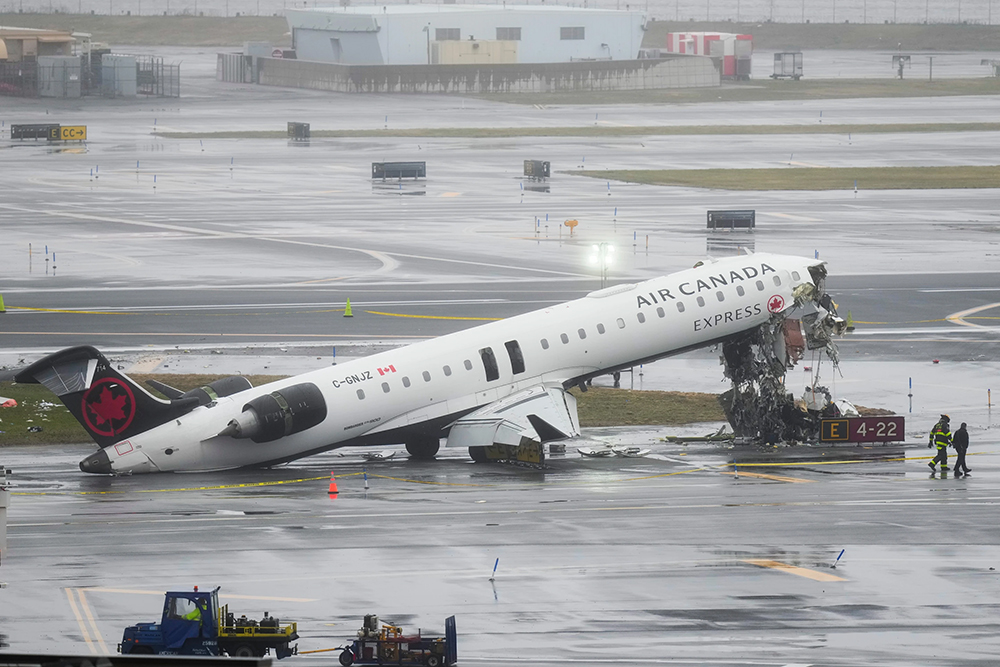
The collision itself proved devastating. The Air Canada Express CRJ-900 aircraft, operated by Jazz Aviation and arriving from Montreal, struck a Port Authority fire truck on the runway shortly before midnight. The force of the impact crushed the nose of the aircraft and resulted in the deaths of both the pilot and first officer, marking a rare and tragic fatal aviation accident at LaGuardia—the first of its kind since 1992.
As reported by The New York Times, early evidence suggests that confusion or distraction within the control tower may have played a role in the events leading up to the collision. Audio recordings from air traffic control, reviewed by The New York Times, indicate that controllers were managing multiple situations simultaneously, including the dispatch of the fire truck to respond to a separate aircraft experiencing a reported odor in its cabin.
Investigators are now working meticulously to reconstruct the timeline. The Air Canada jet had already touched down and was decelerating when it collided with the emergency vehicle, which had entered the runway under urgent circumstances. Within minutes of the crash, a controller informed another incoming flight that the airport was closed indefinitely due to an emergency—a communication also verified by The New York Times through recordings sourced from LiveATC.net.
The human toll of the disaster has been severe. Of the 76 individuals aboard the aircraft—72 passengers and four crew members—41 were transported to nearby hospitals. Kathryn Garcia, executive director of the Port Authority of New York and New Jersey, confirmed that while 32 of those injured have since been released, nine remain hospitalized with serious injuries. Two firefighters aboard the truck were also injured but are reported to be in stable condition.
Eyewitness accounts from passengers paint a harrowing picture of chaos and confusion in the immediate aftermath of the collision. Rebecca Liquori, a nurse from South Baldwin, described a scene devoid of clear leadership or instruction. According to her account, cited in reporting by The New York Times, at least one flight attendant was ejected during the crash, and the aircraft’s emergency slides failed to deploy. Passengers were forced to improvise their escape, scrambling across the wings in darkness and uncertainty.
“The flight attendant that was in the front, she got ejected from the plane,” Liquori recounted. “So we really did not have direction.” Her testimony underscores the breakdown of standard emergency protocols, a factor that investigators are likely to examine closely in the coming weeks.
The physical wreckage remains a stark symbol of the tragedy. More than twelve hours after the collision, the damaged Bombardier jet—its nose sheared off—remained stranded on the runway, halting operations and complicating recovery efforts. The extended closure of critical runway infrastructure has been a primary driver of the ongoing flight disruptions.
The New York Times has emphasized the rarity of such an incident, particularly at a major metropolitan airport like LaGuardia, where safety systems are designed with multiple redundancies. Yet this event appears to expose vulnerabilities in the coordination between ground operations and air traffic control, especially during simultaneous emergency responses.
Aviation experts consulted by The New York Times have noted that runway incursions—situations in which unauthorized vehicles or aircraft occupy an active runway—remain among the most dangerous scenarios in modern aviation. While relatively uncommon, their consequences can be catastrophic, as evidenced by Sunday night’s collision.
Compounding the tragedy is the broader impact on travelers. Thousands of passengers have been stranded or forced to reroute their journeys, with ripple effects extending far beyond New York. Airlines have scrambled to reassign aircraft and crews, while airport authorities work to restore normal operations amid ongoing investigations.
The Federal Aviation Administration and the National Transportation Safety Board have both launched comprehensive inquiries, focusing on air traffic control communications, vehicle movement protocols, and the mechanical integrity of the aircraft’s safety systems.