























|
Getting your Trinity Audio player ready...
|
By: Jeff Gorman
In the volatile intersection of politics, social media, and public accountability, few developments have ignited as much controversy in recent weeks as the resurfacing of past online activity attributed to Rama Duwaji, the wife of New York City Mayor Zohran Mamdani. What began as a series of archival discoveries has rapidly evolved into a broader public debate—one that touches not only on personal expression and youthful indiscretion, but also on ideology, influence, and the responsibilities that accompany proximity to political power.
According to a report on Thursday in The New York Post, Duwaji, 28, quietly deactivated an old account on the platform X following the emergence of posts that many critics have described as deeply troubling. These posts, originally made during her teenage years and early adulthood, included praise for individuals associated with violent terrorist activity, sharp denunciations of Israel, and inflammatory commentary regarding the United States military.
While the deletion of the account may have removed the original source material from public view, it has done little to quell the intensifying scrutiny surrounding her digital history. Indeed, the decision to deactivate the account has, in some quarters, been interpreted not as a resolution but as an implicit acknowledgment of the seriousness of the content.
The controversy gained momentum after investigative findings revealed a series of posts spanning several years, some dating back to as early as 2013. According to The New York Post report, these posts were identified through archival research and corroborated in part through advanced verification methods.
Among the most contentious elements were expressions of admiration for figures linked to militant organizations and rhetoric that rejected the legitimacy of Israel as a state. In one widely cited post, Duwaji reportedly asserted that Tel Aviv “shouldn’t exist,” framing its residents in terms that many observers have condemned as dehumanizing.
Other content attributed to her included harsh critiques of American military actions, as well as reposted material that assigned broad responsibility for global terrorism to Western actors. While such views are not uncommon in certain ideological circles, their presence in the public record of a figure closely associated with the mayor’s office has raised significant concerns.
To understand the significance of these revelations, it is necessary to situate them within a broader context of political activism and discourse. Duwaji, though not an elected official, occupies a position of visibility and influence as the spouse of a major metropolitan leader. Her views, past and present, inevitably intersect with the political environment shaped by her husband.
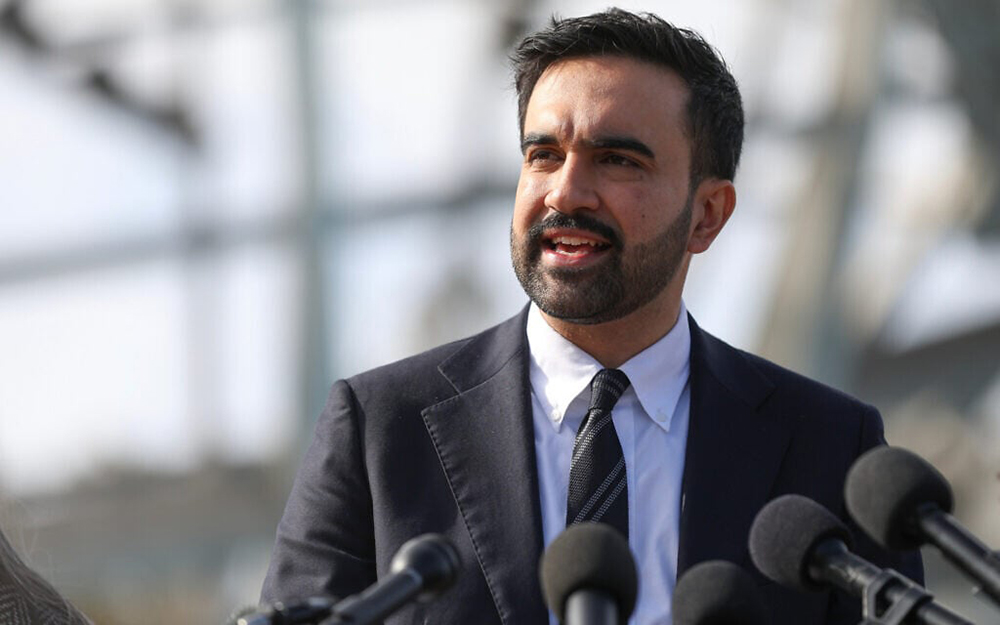
Mayor Mamdani himself has been a vocal critic of Israeli policy, and his political identity is closely aligned with progressive and socialist movements. In defending his wife, he emphasized her status as a private individual, asserting that she has held no formal role in his campaign or administration.
“My wife is the love of my life,” he stated, as reported by The New York Post, adding that it is his responsibility—not hers—to answer for political positions.
Yet this distinction, while technically accurate, does not fully address the underlying concerns. In an era where public figures are often defined as much by their associations as by their actions, the line between private and public life can become increasingly blurred.
What has amplified the controversy is the apparent consistency of the views expressed across multiple platforms and over an extended period. The resurfaced posts are not limited to a single moment of impulsivity or poor judgment; rather, they suggest a pattern of ideological alignment that has persisted over time.
According to The New York Post report, Duwaji’s online activity included not only original posts but also reposts and endorsements of content that many critics view as extremist or deeply biased. This includes material that appeared to celebrate acts of violence and dismiss widely documented allegations of atrocities.
Such patterns have led some observers to question whether the issue can be dismissed as youthful indiscretion. While it is widely accepted that individuals evolve in their views over time, the absence of any public clarification or repudiation has left room for continued speculation.
Notably, Duwaji has remained silent throughout the unfolding controversy. Neither she nor representatives from City Hall have issued a formal response addressing the substance of the allegations. This silence, while perhaps intended to avoid further escalation, has been interpreted by some as a missed opportunity to provide context or demonstrate personal growth.
In contrast, her husband’s defense has focused on delineating the boundaries of responsibility, rather than engaging directly with the content in question. This approach has done little to assuage critics, who argue that the gravity of the material warrants a more substantive response.
The episode underscores the enduring impact of social media in shaping public perception. Posts made years earlier, often in a different cultural and personal context, can resurface with renewed relevance, particularly when individuals assume positions of visibility.
As The New York Post report highlighted, the permanence of digital content means that past expressions are rarely confined to the past. Instead, they become part of an evolving narrative that informs public understanding and judgment.
For individuals connected to political leadership, this dynamic is especially pronounced. The scrutiny applied to their actions and statements is not merely a reflection of curiosity, but a function of the broader implications their views may carry.
At its core, the controversy surrounding Duwaji is not simply about individual posts or personal beliefs. It is about the intersection of ideology, influence, and accountability in a democratic society. The concern expressed by critics is not that dissenting views exist, but that certain expressions—particularly those that endorse violence or deny the legitimacy of Israel—may contribute to a climate of polarization and hostility.
In this regard, the issue extends beyond the individual to encompass broader questions about the standards to which public figures and their close associates should be held.
Public reaction to the revelations has been swift and, in many cases, sharply critical. The controversy has added another layer of complexity to an already dynamic political landscape in New York City, where debates over foreign policy, identity, and social justice frequently intersect.
For Mayor Mamdani, the situation presents a delicate challenge. Balancing personal loyalty with public responsibility requires careful navigation, particularly in a city as diverse and politically engaged as New York.
The long-term political ramifications remain uncertain. While the controversy may fade as new issues emerge, it also has the potential to linger, shaping perceptions of both the mayor and his administration.
In an age where the past is never truly past, the story of Rama Duwaji serves as a reminder that digital footprints can carry lasting consequences—and that the intersection of personal belief and public life remains as consequential as ever.



1 Comment
Arlene Ancona
April 9, 2026She and him are garbage