






















|
Getting your Trinity Audio player ready...
|
By: Fern Sidman
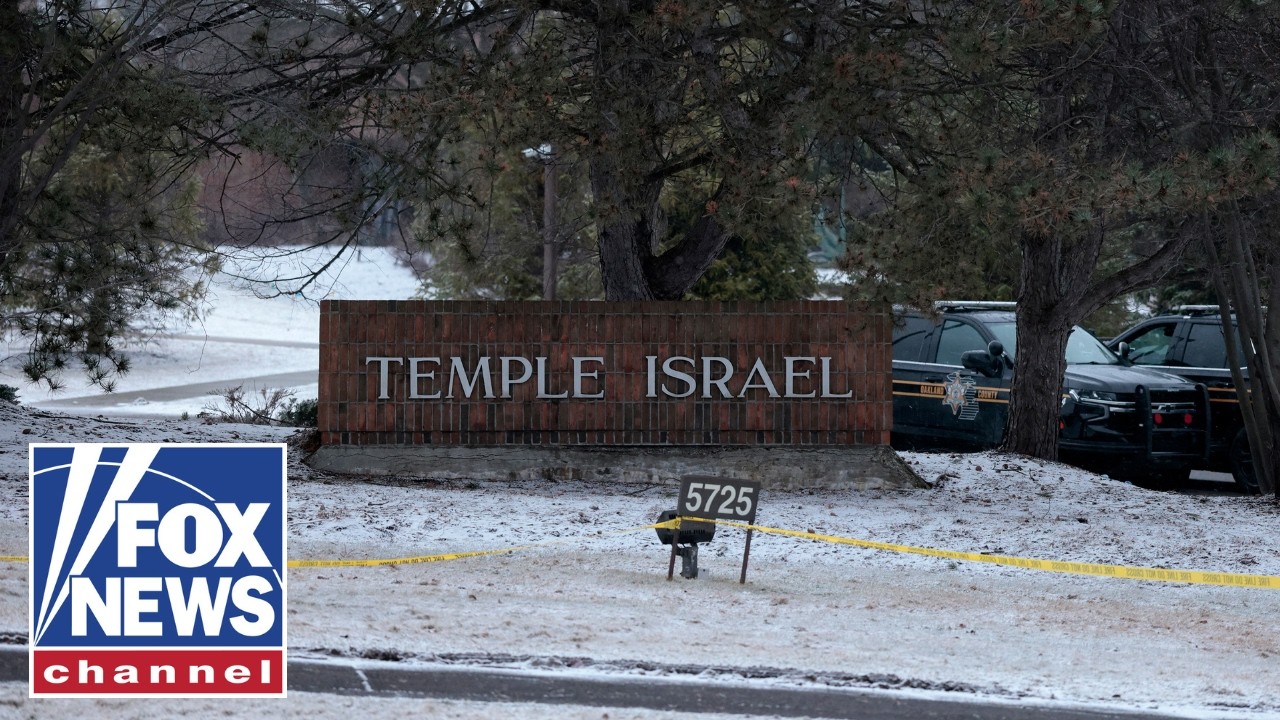
When an armed assailant smashed his vehicle through the entrance of Temple Israel in West Bloomfield, Michigan, on Thursday, the terrifying sequence of events seemed poised to become another tragic chapter in the long and painful history of antisemitic violence against Jewish institutions in the United States.
Yet what could have easily unfolded into a mass casualty attack instead became a powerful testament to preparedness, vigilance, and the courage of those tasked with protecting the synagogue’s community.
According to a report on Friday at the Jewish Telegraphic Agency (JTA), the attacker—armed with rifles and smoke bombs—encountered a synagogue that had spent years preparing for exactly such a scenario. Those preparations, combined with rapid action by security personnel and disciplined adherence to emergency protocols, prevented what authorities say could have been a far deadlier tragedy.
The attacker rammed his vehicle through the synagogue’s doors and drove down a hallway, injuring the congregation’s security director in the process. But within moments, armed guards engaged the suspect, ultimately neutralizing him before he could harm congregants or staff.
No additional victims were injured—a result many at Temple Israel now describe as nothing short of extraordinary.
Temple Israel is one of the largest Reform synagogues in the United States, serving a vibrant Jewish community in the Detroit metropolitan area. Over the past decade, like many Jewish institutions across the country, the synagogue has dramatically expanded its security infrastructure in response to rising threats.
According to the JTA report, Temple Israel maintains a full-time security director, armed security personnel, and a sophisticated remote security system capable of isolating sections of the building during emergencies.
Those measures proved decisive during Thursday’s attack.
“We always worry that you can plan and plan and practice and practice, and it won’t matter,” said Jen Lader in an interview with the JTA. “But it feels like a miracle that everything worked the way it was supposed to.”
The rabbi emphasized that the outcome was the result of both preparation and bravery. “Our team was so incredibly brave,” she said. “And local law enforcement has been amazing.”
When the attacker drove his vehicle into the synagogue, he struck the congregation’s director of security, injuring him as the car barreled through the building’s entrance. Despite the injury, security personnel responded quickly.
Armed guards confronted the assailant and opened fire, killing him before he could move deeper into the building. Authorities later confirmed that the suspect had been carrying rifles and smoke bombs, suggesting that the attack was intended to cause significant casualties.
According to the JTA report, investigators believe the attacker intended to create chaos and panic before launching a shooting spree inside the synagogue. The quick response by security prevented that scenario from unfolding.
While security guards confronted the attacker, synagogue staff initiated lockdown procedures designed specifically for active shooter situations. Teachers working in the building’s classrooms—including those in the synagogue’s early childhood programs—immediately secured students and followed emergency protocols.
Rabbi Lader praised their discipline and composure. “Our teachers followed, to the absolute letter, our active shooter training and lockdown procedures,” she told the JTA. “And they saved every kid.”
Parents later reunited with their children after authorities determined the building was secure.
Local law enforcement officials quickly commended the synagogue’s security measures and training. Michael Bouchard and Dale Young both highlighted the importance of active shooter preparedness in limiting the damage.
Young praised the coordinated response during a press conference outside the synagogue. “We train on active shooter events a lot,” he said. “I think that training certainly helped to mitigate what happened here today.”
JTA reported that police and firefighters arrived quickly at the scene and worked with synagogue staff to secure the building. The attack is part of a troubling pattern of violence targeting Jewish institutions in the United States.
Security concerns intensified after the 2018 massacre at the Tree of Life synagogue in Pittsburgh, where 11 Jewish worshippers were murdered during Shabbat services. In response, Jewish communities nationwide began investing heavily in security infrastructure and training.
The JTA reported that many synagogues now employ armed guards, reinforced building entrances, surveillance systems, and emergency lockdown protocols. Training programs have also become common.
In a striking coincidence, FBI agents had visited Temple Israel just weeks before Thursday’s incident to conduct an active shooter preparedness course.
According to the Jewish Telegraphic Agency, the training was part of the Active Shooter Attack Prevention and Preparedness program conducted by the FBI. The program teaches participants to apply the “Run, Hide, Fight” principles during emergencies and includes scenario-based exercises designed to improve decision-making under stress.
The training appeared to have a direct impact on how synagogue staff responded.
National Jewish security experts say the Temple Israel attack demonstrates the value of sustained investment in protective measures. Michael Masters told the Jewish Telegraphic Agency that the Detroit Jewish community’s long-term commitment to security played a crucial role. “Investing in security is a down payment on the Jewish future,” Masters said. “The community that made up the synagogue has been making that investment for years.”
Those investments include physical infrastructure improvements such as reinforced doors, controlled access points, and barriers designed to prevent vehicles from approaching buildings.
Security professionals often recommend bollards, fences, or natural obstacles to block vehicles—precautions that have become increasingly common at Jewish institutions.
The attack has deeply shaken the Detroit Jewish community.
Noah Arbit, a lifelong congregant of Temple Israel, learned about the attack while working on the floor of the Michigan House of Representatives. He rushed immediately to the synagogue. “I campaigned on taking on hate crimes,” Arbit told the JTA. “And to see it come home to my own synagogue is just my worst nightmare.”
Although he praised the swift response of security and police, Arbit expressed anger that such measures are necessary. “Jewish communities across the country have watched our institutions become fortresses,” he said.
For Jewish leaders across the region, the attack serves as a sobering reminder that vigilance remains essential. Mark Miller said the events reinforced why synagogues must prioritize security. “This is one of those days that reminds us we don’t have a choice,” Miller said in comments cited by the JTA.
His own synagogue previously experienced a frightening incident in 2022, when a man shouted antisemitic threats while parents were dropping off preschool children. Despite the shock and fear caused by Thursday’s attack, many members of the Temple Israel community are focusing on gratitude.
Rabbi Lader described the synagogue’s response as a collective act of courage. “Everybody flees danger,” she said. “But our team went straight toward it.” She also praised the teachers, staff members, and law enforcement officers who helped protect the congregation. “I want to make sure the message gets out there,” she told the JTA. “Our building was full of heroes.”
In the aftermath of a terrifying attack that could have ended in tragedy, those heroes—and the years of preparation that guided them—proved that vigilance and resilience can make the difference between catastrophe and survival.