























|
Getting your Trinity Audio player ready...
|
Pentagon Moves Marines Toward Iran as Conflict Deepens, Signaling Readiness for Potential Ground Offensive
By: Fern Sidman
As the war between the United States and Iran continues to escalate, the Pentagon is quietly preparing for a new and potentially decisive phase of the conflict: the possibility of ground operations on Iranian soil. Senior defense officials have authorized the deployment of a Marine Expeditionary Unit to the Middle East, a move that military analysts say represents one of the clearest indications yet that Washington is preparing for scenarios beyond the current air and naval campaign.
According to a report on Friday in The Wall Street Journal, Defense Secretary Pete Hegseth approved a request from U.S. Central Command to deploy the elite Marine force capable of conducting rapid assault operations. The development marks a significant escalation in America’s military posture as tensions with Iran continue to intensify across multiple fronts.
Officials familiar with the decision told The Wall Street Journal that the move reflects growing concern inside the Pentagon about Iranian attacks on international shipping and the potential need for swift ground intervention if the conflict broadens further.
The Marine Expeditionary Unit (MEU) being dispatched is designed for exactly the type of unpredictable conflict now unfolding in the Persian Gulf. Typically composed of roughly 2,500 Marines, along with aviation units and amphibious assault vehicles, an MEU is structured to launch amphibious landings, rapid raids, and limited ground invasions with minimal preparation time.
Two officials speaking to The Wall Street Journal said the unit will be positioned close enough to Iran to respond quickly should the situation deteriorate.
Military planners believe the Marines may be drawn from the Marine Corps Air Ground Combat Center in Twentynine Palms, California, one of the United States’ primary training facilities for expeditionary warfare.
The decision reflects the Pentagon’s recognition that the conflict with Tehran is no longer confined to aerial bombardment and naval engagements. Instead, it may evolve into a broader confrontation requiring flexible and immediate ground capabilities.
“The Marine Expeditionary Unit is built precisely for this type of crisis,” one defense official explained in comments cited by The Wall Street Journal. “It allows the United States to respond quickly to emerging threats, whether that means securing strategic infrastructure, evacuating civilians, or conducting limited offensive operations.”
Additional details reported by The Wall Street Journal indicate that the deployment may involve an Amphibious Ready Group, a naval task force typically paired with a Marine Expeditionary Unit.
According to three U.S. officials cited by the newspaper, the operation could include multiple warships and up to 5,000 Marines and sailors, creating a powerful amphibious strike capability in the region.
Parallel reporting has suggested that the 31st Marine Expeditionary Unit, consisting of approximately 2,200 Marines, has been ordered toward the Middle East alongside the Tripoli Amphibious Ready Group.
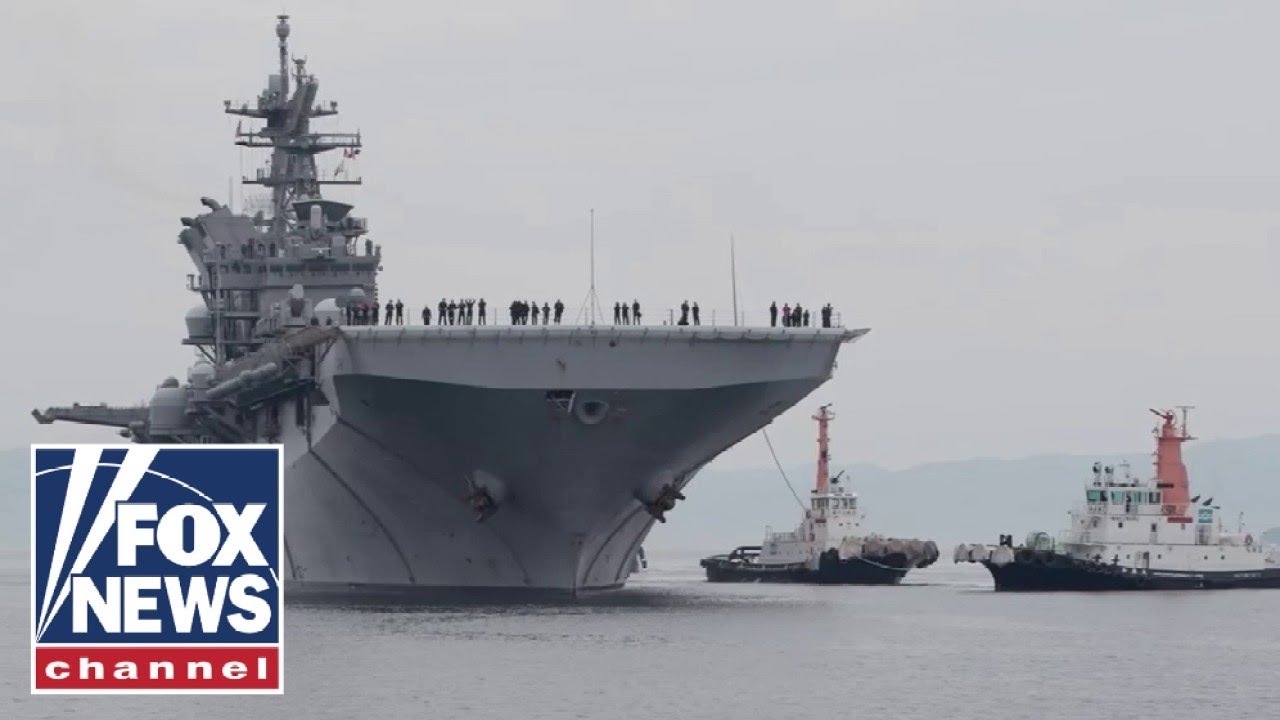
The naval contingent reportedly includes the amphibious assault ship USS Tripoli (LHA-7), the amphibious transport dock USS San Diego (LPD-22) and the amphibious transport dock USS New Orleans (LPD-18).
These vessels carry not only Marines but also advanced aviation assets, including roughly 20 F-35B Lightning II stealth fighter aircraft capable of operating from amphibious ships.The presence of these aircraft dramatically expands the operational reach of the Marine force, enabling both close air support and precision strike missions.
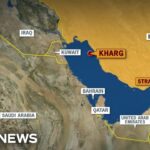
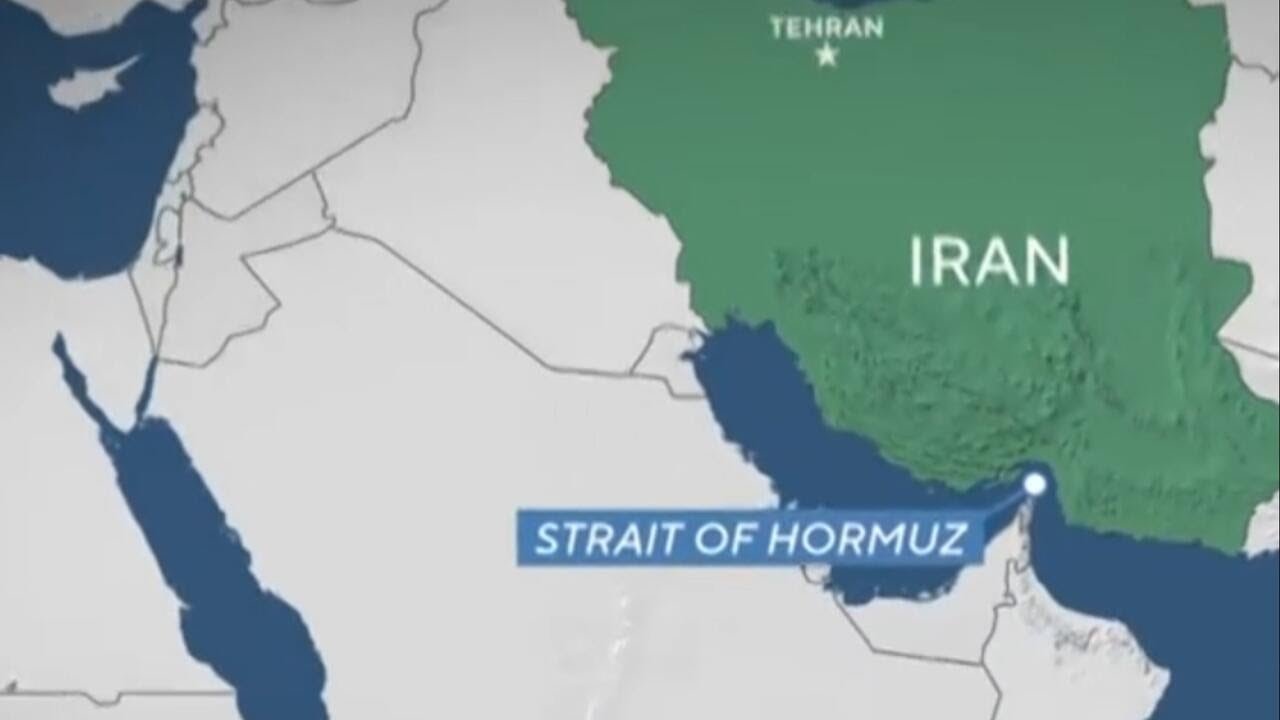
The deployment comes amid rising tensions in the Strait of Hormuz, the narrow maritime corridor through which approximately one-fifth of the world’s oil supply passes each day. Iran has repeatedly threatened to disrupt shipping through the strait in retaliation for American and allied military operations targeting its missile infrastructure and military leadership.
According to The Wall Street Journal, the Pentagon is increasingly concerned about attacks on commercial vessels, which could destabilize global energy markets and draw additional countries into the conflict. Iranian forces have previously used fast attack boats, naval mines, and drones to harass shipping traffic in the region.
The arrival of amphibious assault ships and Marines would provide the United States with the ability to respond quickly to such threats, including securing strategic waterways or capturing coastal launch sites used for missile or drone attacks.
At the same time, the U.S. military is introducing new defensive technologies aimed at countering Iran’s extensive drone arsenal.
The U.S. Army recently confirmed the deployment of 10,000 AI-enabled interceptor drones to the Middle East. The systems, developed in Ukraine by the California-based defense venture Project Eagle, are designed to intercept Iran’s one-way attack drones.
According to Army Secretary Dan Driscoll, the interceptors offer a cost-effective alternative to expensive missile defense systems currently used to shoot down drones.
Iran’s strategy in recent conflicts has relied heavily on relatively inexpensive unmanned aerial vehicles that can overwhelm traditional air defenses.
By deploying large numbers of interceptor drones, the United States hopes to neutralize these attacks without exhausting high-cost missile inventories. Defense analysts say the approach reflects a broader shift in modern warfare toward drone-versus-drone combat.
Despite the increasingly robust military preparations, American leaders have been careful to avoid signaling an imminent ground invasion. President Donald Trump addressed the possibility of broader escalation while speaking to reporters earlier this week.
Trump indicated that he does not expect an immediate uprising against the Iranian government, even as military pressure intensifies. “I don’t think the Iranian people are ready to rise up right now,” the president said, adding that he believes he will instinctively recognize when the conflict has reached its natural conclusion. “I’ll feel it in my bones when it’s time for the war to end,” he remarked.
The comments suggest that while the administration is preparing for a wide range of contingencies, it may still prefer to achieve its objectives through military pressure rather than a full-scale occupation.
Defense experts say the Marine deployment represents a prudent but unmistakable signal that the United States is preparing for multiple possible outcomes. “The Pentagon always prepares for worst-case scenarios,” said one analyst familiar with the situation. “Positioning Marines in the region ensures that if the conflict expands, the United States will not be caught off guard.”
According to The Wall Street Journal report, the Pentagon’s decision reflects a broader strategic calculation: maintaining overwhelming military flexibility while keeping adversaries uncertain about America’s next move. The Marine Expeditionary Unit’s presence could serve several purposes simultaneously — deterring Iranian escalation, protecting shipping lanes, and providing the option of rapid offensive operations if required.
The buildup of American forces near Iran is being closely watched by governments across the Middle East, Europe, and Asia. Any disruption to shipping in the Strait of Hormuz could trigger dramatic spikes in global energy prices, potentially destabilizing economies worldwide.
For now, officials quoted by The Wall Street Journal emphasize that the deployment is primarily precautionary. But the message is unmistakable: as the war with Iran enters an increasingly volatile phase, the United States is positioning its most versatile forces within striking distance — ready to respond swiftly should the conflict cross another dangerous threshold.
Whether those forces will ultimately be required to launch ground operations remains uncertain.
Yet the arrival of Marines, amphibious warships, stealth aircraft, and thousands of interceptor drones signals one undeniable reality: the United States is preparing for the possibility that the war’s next chapter could unfold not just in the skies or at sea, but on the ground.