

















|
Getting your Trinity Audio player ready...
|
By: Fern Sidman
In a development that underscores the widening geographic scope and technological complexity of the ongoing conflict between Israel and Iran, reports have emerged of a highly sensitive Israeli strike targeting Iranian naval assets in the Caspian Sea—an area far removed from the traditional theaters of confrontation. The operation, described as unprecedented in both reach and strategic intent, signals a dramatic escalation in what has increasingly become a multi-dimensional conflict involving not only regional actors but also global powers.
According to detailed reporting by “The Independent” in Arabic, the strike, which occurred Wednesday night, was based on actionable intelligence indicating that one of the vessels in an Iranian maritime convoy was transporting advanced military equipment from Russia. The shipment reportedly included drones and sophisticated electronic systems, raising immediate concerns about the deepening military cooperation between Moscow and Tehran.
The Caspian Sea, bordered by several nations including Iran and Russia, has historically been considered a relatively insulated zone, largely detached from the more volatile dynamics of the Middle East. The reported Israeli strike marks a significant departure from this pattern, representing what an Israeli military official described as the first known operation by the Israeli Air Force in this region.
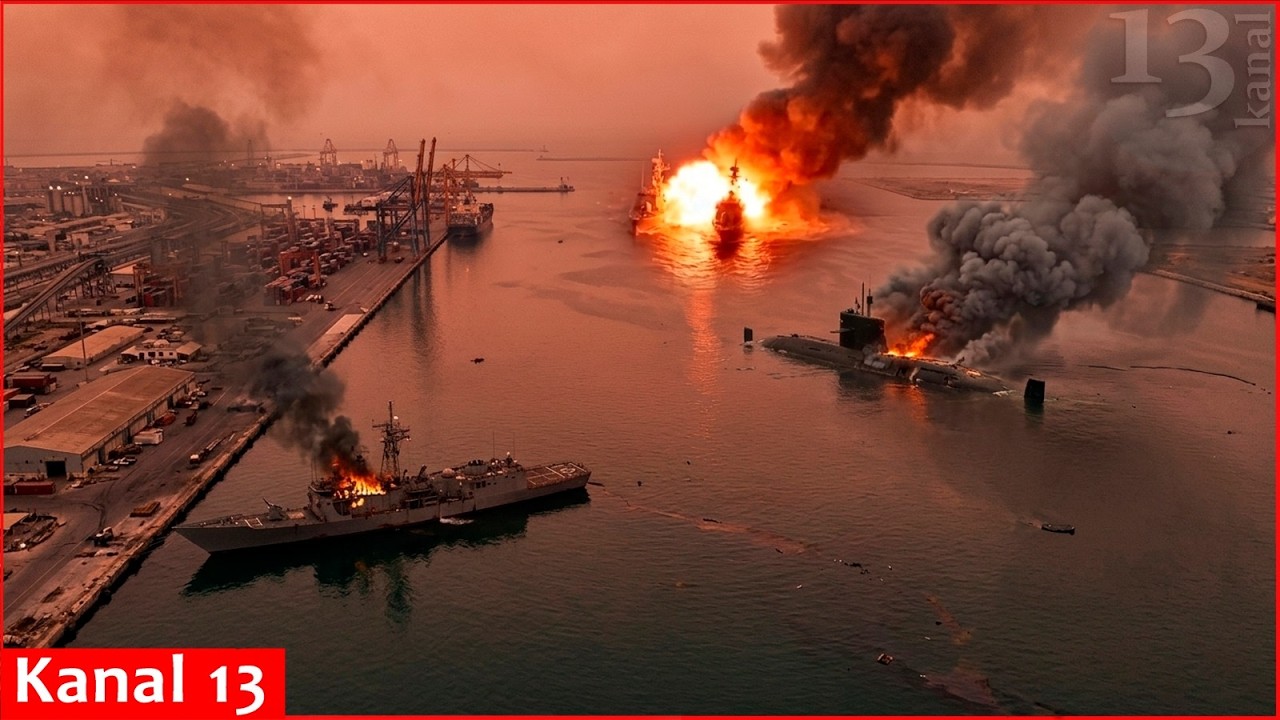
As reported by The Independent Arabic, multiple Iranian naval vessels were struck during the operation, with some accounts suggesting that as many as five large warships were destroyed and an additional smaller vessel sustained damage. The strike is believed to have taken place near the port of Bandar Anzali, a strategically significant location situated close to key Iranian energy infrastructure.
The choice of target and location reflects a calculated effort to disrupt not only the immediate shipment but also the broader logistical network supporting Iran’s military capabilities.
The operation was reportedly initiated following intelligence indicating that the targeted vessel was carrying a “sensitive shipment” from Russia. According to The Independent Arabic, the cargo included unmanned aerial systems and advanced electronic equipment, both of which are critical components in modern warfare.
While independent verification of the cargo has proven challenging, the report cites an Iranian source who claimed that a relative was aboard the vessel and confirmed the nature of the shipment. Such accounts, while anecdotal, contribute to a growing body of evidence suggesting that the strike was aimed at disrupting a significant transfer of military technology.
The reported presence of Russian-supplied equipment aboard the targeted vessel aligns with broader trends in the evolving relationship between Moscow and Tehran. Over the past several years, the two nations have developed increasingly close ties, particularly in the scope of military and intelligence cooperation.
According to additional reporting cited by The Independent Arabic, Russia has been actively providing Iran with enhanced drone technology, including modified components designed to improve communication, navigation, and targeting capabilities. These advancements are believed to have been informed by Russia’s operational experience in Ukraine, where drones have played a central role in combat operations.
The transfer of such technology represents a significant escalation in the capabilities available to Iran, enabling more precise and effective targeting of adversaries.
The influence of Russian military doctrine is increasingly evident in Iran’s operational patterns. Analysts cited by The Independent Arabic note that Iran has adopted tactics similar to those employed by Russian forces in Ukraine, particularly the use of drones to overwhelm air defense systems before launching missile strikes.
This approach has reportedly been employed in recent attacks against U.S. and allied assets in the Gulf region. Targets have included early warning radar systems supporting missile defense installations, as well as infrastructure in countries such as Bahrain, Kuwait, and Oman.
The effectiveness of these tactics suggests a level of coordination and knowledge transfer that extends beyond mere equipment supply, encompassing training, strategic planning, and operational execution.
Despite the absence of a formal military alliance, Iran is widely regarded as Russia’s closest partner in the Middle East. The relationship has evolved significantly since the early 2000s, gaining momentum in the aftermath of Russia’s invasion of Ukraine.
As detailed in reporting by The Independent Arabic, the two countries have established joint committees and working groups focused on military and security cooperation. High-level delegations frequently exchange visits, and joint exercises have been conducted to enhance interoperability.
Russia has also played a role in advancing Iran’s technological capabilities, including the development and launch of satellite systems. These efforts at collaboration reflect a strategic alignment that, while not formalized in treaty form, is nonetheless robust and multifaceted.
The war in Ukraine has served as a testing ground for many of the technologies and tactics now being observed in the Middle East. Russian forces have extensively utilized drones, reportedly deploying tens of thousands of units over the course of the conflict.
According to The Independent Arabic, Iranian personnel have traveled to observe these operations firsthand, gaining insights into the usage and effectiveness of drone systems. This exchange of knowledge has facilitated the adaptation of similar tactics in other contexts, including the current conflict with Israel.
The result is a convergence of technological and strategic approaches that blur the lines between regional and global conflicts.
While the deepening cooperation between Russia and Iran presents new challenges, it is not without limitations. Analysts cited by The Independent Arabic note that Russia’s ability to provide assistance is constrained by its ongoing commitments in Ukraine, as well as by broader geopolitical considerations.
The Kremlin is reportedly cautious about escalating tensions with the United States, particularly under the leadership of President Trump. As a result, the extent of support provided to Iran may be calibrated to avoid provoking a direct confrontation.
This cautionary balance reflects the complexity of the current geopolitical landscape, in which multiple actors pursue overlapping but not identical objectives.
The Israeli strike on the Iranian fleet in the Caspian Sea carries significant implications for the trajectory of the conflict. By targeting a shipment believed to contain advanced military technology, Israel has demonstrated both its intelligence capabilities and its willingness to operate far beyond traditional rules of engagement. The operation also sends a clear signal regarding the risks associated with the transfer of military technology to Iran, particularly in the context of an ongoing conflict.
At the same time, the strike raises questions about potential retaliation and the possibility of further escalation. As The Independent Arabic has observed, the widening scope of the conflict increases the likelihood of unintended consequences and broader regional instability.
The reported events in the Caspian Sea illustrate the increasingly global nature of the conflict between Israel and Iran. What was once a localized confrontation has evolved into a complex network of interactions involving multiple countries, technologies, and strategic interests.
As chronicled by The Independent Arabic, the intersection of Israeli military operation, Iranian ambitions, and Russian support has created a dynamic that is both volatile and unpredictable.
In this context, the strike on the Iranian fleet represents more than a tactical success; it is a manifestation of a broader struggle that transcends geographic boundaries and traditional lines of conflict.
As the situation continues to develop, the international community will be watching closely, aware that the decisions made in this moment may shape the contours of global security for years to comehttps://youtu.be/ctVwAficnDQ